
Choosing the right gutter material for your home is one of those decisions that looks simple on the surface but carries real consequences for your roof, your foundation, and your wallet. The types of gutter materials homes rely on range from affordable vinyl to premium copper, and each comes with a different set of trade-offs. Get it right and your gutters protect your home quietly for decades. Get it wrong and you're dealing with leaks, rust, and premature replacements. This guide breaks down every major material option so you can make a confident, informed choice.
Table of Contents
- Key takeaways
- 1. How to evaluate gutter materials before you buy
- 2. Vinyl gutters: the budget-friendly starter option
- 3. Aluminum gutters: the most popular choice for a reason
- 4. Copper gutters: the premium choice with a century of life
- 5. Galvanized steel gutters: strong but demanding
- 6. Zinc gutters: low maintenance with a luxury price
- 7. Side-by-side comparison of gutter materials
- 8. Choosing the right material for your specific situation
- What I've learned after a decade in gutters and roofing
- Ready to choose and install with confidence?
- FAQ
Key takeaways
| Point | Details |
|---|---|
| Material choice affects lifespan | Vinyl lasts 10–15 years while copper can last 50–100 years depending on installation and climate. |
| Installation quality matters most | Even premium materials fail when installation is defective or joints are misaligned. |
| Climate drives the right pick | Wet climates favor rust-resistant aluminum or copper; extreme cold shortens vinyl's lifespan significantly. |
| Budget and maintenance are linked | Lower-cost materials often require more frequent upkeep, so total cost of ownership matters more than upfront price. |
| Gutter style and material are separate | Style and material are independent decisions; choose your material first based on performance needs, then select your profile. |
1. How to evaluate gutter materials before you buy
Before comparing any specific gutter material options, you need a clear framework. Otherwise, you end up picking based on price alone and regretting it two winters later.
Here are the key criteria worth weighing:
- Durability and lifespan: How long will the material hold up in your specific climate? A material rated for 25 years in mild weather might degrade in 10 in a wet Pacific Northwest environment.
- Maintenance requirements: Some materials are nearly hands-off. Others need annual painting, rust treatment, or sealant reapplication.
- Cost per linear foot: Both material and installation costs vary widely. Factor in the total job, not just the product price.
- Aesthetic compatibility: Gutters are visible. The material's finish and color options should complement your roofline and siding.
- Climate sensitivity: Improper material selection for local weather conditions is one of the leading causes of premature gutter failure.
- Installation complexity: Some materials require professional welding or soldering. Others are DIY-friendly. Your choice should reflect the available installation method.
Pro Tip: Treat gutter material and gutter style as two completely separate decisions. Choose material first based on durability, climate, and budget. Then choose your profile, such as K-style or half-round, based on aesthetics and drainage volume.
2. Vinyl gutters: the budget-friendly starter option
Vinyl, or PVC, gutters are the most accessible entry point in residential gutter systems. They are lightweight, come in a variety of colors, and require no painting or rust treatment. For homeowners on a tight budget who want a functional system without professional installation costs, vinyl has real appeal.
The practical benefits are clear:
- Low purchase price per linear foot
- No risk of rust or corrosion
- Available in pre-cut sections that snap together easily
- Wide color range without needing to paint
The trade-offs are just as real, though. Vinyl gutters last around 10–15 years on average and perform poorly in extreme temperatures. In freezing climates, they become brittle and crack under ice loads. In intense summer heat, they can warp and pull away from fascia boards.
Vinyl also has a lower weight tolerance. Heavy debris loads or standing water from clogs can bow the sections over time, causing drainage problems. Joints in sectional vinyl systems are also a common leak point since the gaskets degrade with UV exposure.
Pro Tip: If you choose vinyl, budget for a replacement within 12 to 15 years. Vinyl is a cost-effective short-term solution, not a long-term one. For homes in Washington state specifically, our gutter cleaning checklist explains how often to clear debris to extend any gutter system's lifespan.
3. Aluminum gutters: the most popular choice for a reason
Aluminum is the dominant material in residential gutter installation across the country, and for good reason. It sits in the sweet spot between affordability and durability. It is lightweight, resistant to rust, and available in dozens of colors and two main thicknesses: 0.025 inch for standard use and 0.032 inch for heavier-duty applications.
Key advantages of aluminum:
- Lifespan of around 25 years with proper maintenance
- Does not rust, making it suitable for wet climates like the Seattle area
- Can be installed as seamless gutters, which eliminates the majority of leak-prone joints
- Accepts paint well, so color-matching to your home exterior is straightforward
The weaknesses are manageable but worth knowing. Aluminum dents more easily than steel, so falling branches or ladder contact can leave visible damage. In very cold climates, repeated freeze-thaw cycles can cause cracking in thinner gauges. And while aluminum holds paint well, it will eventually need recoating.
Seamless aluminum is the most popular upgrade. A contractor rolls the material on-site to fit your home's exact dimensions, which dramatically reduces the number of joints and, by extension, the number of potential leak points.
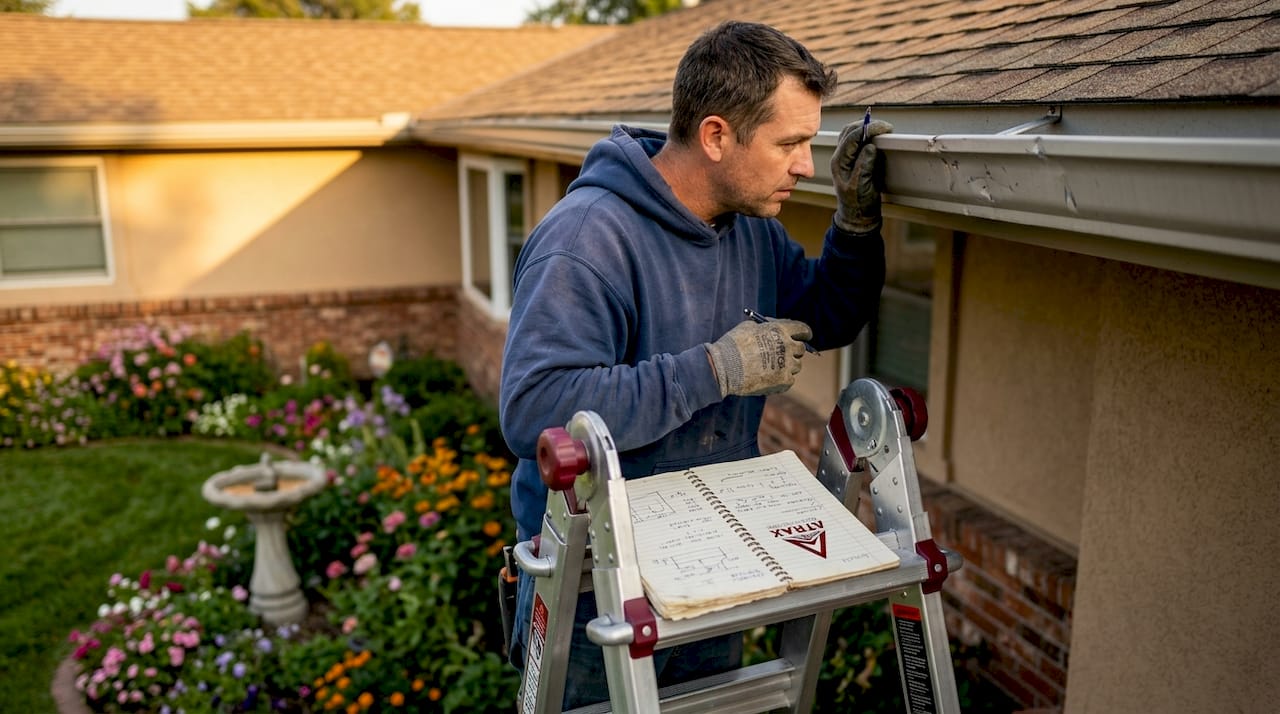
Pro Tip: When choosing aluminum, go with 0.032-inch thickness instead of the standard 0.025-inch gauge. The price difference per linear foot is modest, but the added rigidity meaningfully reduces denting and sagging over time.
4. Copper gutters: the premium choice with a century of life
Copper gutters are in a different category entirely. They are not for every home or every budget, but for the right property they are arguably the best gutter material available. Copper can last 50 to 100 years, resists rust completely, and requires no painting. Over time, copper develops a green patina that many homeowners find architecturally attractive.
The obvious barrier is cost. Copper gutters are the most expensive option on the market, both in material and installation. They must be installed by an experienced professional using soldered joints. You cannot use aluminum hangers or fasteners with copper since dissimilar metals cause galvanic corrosion. Everything connected to a copper gutter system needs to be compatible.
Despite the upfront investment, copper makes financial sense on historic homes, high-end properties, and situations where a 50-plus-year system is the goal. The lifetime maintenance cost is also low since copper does not rust or require repainting.
5. Galvanized steel gutters: strong but demanding
Galvanized steel gutters offer strength that aluminum simply cannot match. They handle heavy debris loads, snow weight, and physical impact far better. That structural advantage comes with a significant caveat, though. Galvanized steel is prone to rust within 10–15 years if the zinc coating wears down and the steel underneath is exposed to moisture.
In wet climates, that is a serious consideration. Steel gutters also require professional installation due to their weight and the soldering needed at joints. They are heavier than aluminum, which means additional stress on fascia boards and hangers.
Steel is a reasonable choice for homes in low-humidity environments where structural strength is the priority. For Pacific Northwest homeowners dealing with constant rain and moisture, the rust risk often makes aluminum or copper a smarter long-term bet.
6. Zinc gutters: low maintenance with a luxury price
Zinc sits alongside copper as a premium, long-lifespan gutter option. It naturally develops a protective patina that shields the metal from further corrosion, and zinc gutters last around 50 years with minimal maintenance. They are popular on historic and luxury homes where aesthetics and longevity are the primary drivers.
The downsides mirror those of copper: high cost, professional-only installation via welded joints, and sensitivity to acidic environments. If your roof has certain types of green moss or acidic runoff, zinc can degrade faster than its rated lifespan.
Zinc is rarely the right fit for a standard residential project, but it is worth knowing about if you are restoring an older home or working on a high-end build where visual detail and longevity both matter.
7. Side-by-side comparison of gutter materials
A direct comparison makes the decision much clearer. Here is how the main gutter types stack up across the criteria that matter most to homeowners:
| Material | Avg. lifespan | Maintenance level | Cost (per linear ft.) | Rust risk | DIY friendly? |
|---|---|---|---|---|---|
| Vinyl | 10–15 years | Low | $ (lowest) | None | Yes |
| Aluminum | 20–25 years | Low to moderate | $$ | None | Yes (seamless: no) |
| Galvanized steel | 10–20 years | High | $$ | High without upkeep | No |
| Copper | 50–100 years | Very low | $$$$ (highest) | None | No |
| Zinc | ~50 years | Very low | $$$ | Very low | No |
Cost per linear foot varies by region and supplier, but this ranking reflects relative positioning across the U.S. market. Copper and zinc require the highest upfront investment but the least ongoing maintenance. Vinyl costs the least upfront but requires the earliest replacement.
8. Choosing the right material for your specific situation
The right gutter material depends on your climate, your budget, and how much time you are willing to put into maintenance each year. There is no single best answer for every home.
Here is a practical way to think through your decision:
- Tight budget, mild climate: Vinyl is a reasonable short-term solution. Expect to replace in 12 to 15 years.
- Mid-range budget, wet climate: Aluminum, especially seamless, is the most practical and widely proven choice for areas with consistent rainfall.
- Higher budget, historic or high-end home: Copper or zinc will outlast the other materials by decades and add genuine curb appeal.
- High debris area (trees, pine needles): Seamless aluminum or steel, combined with gutter guards, reduces cleaning frequency and prevents joint failures. Check out how gutter upgrades affect property value before committing.
- DIY installation preferred: Vinyl or sectional aluminum are the only realistic self-install options. Every other material requires professional work.
Pro Tip: Never let the material choice overshadow the importance of installation. Poor slope and clogged joints are the leading causes of gutter system failure, regardless of what the gutter is made from. A well-installed aluminum system will outperform a poorly installed copper one every time.
What I've learned after a decade in gutters and roofing
I have installed and replaced gutters on hundreds of homes across the Seattle area, and the pattern I keep seeing is this: homeowners focus almost entirely on material choice and almost never on installation quality. They spend weeks researching copper versus aluminum and then hire the cheapest installer they can find. That is backwards.
I have seen vinyl systems that lasted 20 years because they were installed correctly, maintained regularly, and fitted with proper pitch. I have also seen aluminum systems fail in five years because of misaligned hangers and joints that were never sealed properly. Gutter failure most often starts at the joints and connections, not in the middle of a run. That is true across every material.
My honest advice: pick a material that fits your budget and climate, then put the rest of your energy into finding an installer who takes slope, joint quality, and long-term waterproofing seriously. For most homeowners in the Pacific Northwest, seamless aluminum hits the right balance. It is affordable, rust-resistant, and when installed well, it handles our rainfall without complaint.
And do not skip maintenance. Every material on this list benefits from at least two cleanings per year. A $200 cleaning call is far cheaper than a $4,000 fascia replacement caused by standing water in a clogged gutter.
— Danyllo
Ready to choose and install with confidence?
At Atraxroofandgutter, we work with all major gutter materials and help homeowners across Kirkland, Bellevue, Seattle, and surrounding communities find the right fit for their home and budget. Whether you are upgrading to seamless aluminum, replacing aging vinyl, or considering a copper system for a high-end property, our team brings over 10 years of hands-on experience to every installation.
Browse our completed gutter projects to see real results across different materials and home styles. If upfront cost is a concern, we also offer flexible financing options to make a quality installation accessible. When you are ready to move forward, our gutter replacement service page covers everything you need to know. Contact us for a free, no-surprise quote today.
FAQ
What is the most popular gutter material for homes?
Aluminum is the most widely used residential gutter material due to its rust resistance, affordability, and 20 to 25-year lifespan. Seamless aluminum is the preferred upgrade for homeowners who want fewer leak points and lower long-term maintenance.
How long do vinyl gutters last compared to aluminum?
Vinyl gutters typically last 10 to 15 years, while aluminum averages 20 to 25 years. The gap widens in extreme climates, where vinyl degrades significantly faster than metal options.
Are copper gutters worth the cost?
For high-end or historic homes with a long-term ownership horizon, copper is worth considering. With a lifespan of 50 to 100 years and near-zero rust risk, the lifetime cost can actually be competitive with materials that require replacement every 15 to 25 years.
Does gutter material affect how often I need to clean them?
The material itself does not change how often debris accumulates. What affects cleaning frequency is your gutter profile, your local tree coverage, and whether you have gutter guards installed. That said, improper maintenance shortens the lifespan of every material on the market.
Can I install gutters myself?
Vinyl and sectional aluminum gutters are the only realistic DIY options. Steel, copper, and zinc all require professional installation due to weight, soldering, or welding requirements. Seamless aluminum also needs a contractor since the material is formed on-site with specialized equipment.