

Roofing bid comparison is the process of evaluating multiple contractor proposals side by side, examining scope, materials, warranties, and compliance, not just total price. Washington homeowners who compare roofing bids as an investment decision, rather than a simple cost exercise, consistently get better outcomes and fewer surprises. Sources like Angi, IKnowARoofer, and Seattle's SDCI confirm that price spreads of 50% to 100% for identical projects are common, driven almost entirely by scope differences. The lowest bid is rarely the best value. Understanding what drives those differences is the foundation of a smart roofing investment.
How many roofing bids should you get?
The industry standard for roofing estimate comparison is three to four bids. 2026 industry guides recommend three to four estimates for a normal residential roof, with larger or more complex projects potentially justifying one or two more. That range gives you enough data to spot outliers without creating decision fatigue from too many competing proposals.
Getting fewer than three bids leaves you without a market baseline. You have no way to know whether a single quote is fair, inflated, or suspiciously low. Getting more than five bids introduces confusion, especially when contractors begin asking what competitors offered. That question matters because anchoring, where a contractor adjusts their price based on a competitor's number rather than actual costs, distorts the comparison.
Here is what multiple bids actually reveal:
- Market range: You see the realistic floor and ceiling for your specific project in your area.
- Scope outliers: A bid that is 40% lower than the others almost always excludes something, such as decking repair, flashing replacement, or a quality underlayment.
- Contractor confidence: Contractors who ask detailed questions about your roof before quoting are more likely to deliver accurate proposals.
- Red flags: Lump-sum bids with no line-item breakdown signal a contractor who either cannot or will not be transparent about costs.
Pro Tip: Before contacting any contractor, prepare a simple scope baseline document that lists your roof's square footage, current material, known problem areas, and your preferred shingle tier. Giving every contractor the same starting information collapses bid variance and makes your comparison far more meaningful. An independent scope baseline is the single most effective tool for getting truly comparable estimates.
What to compare in roofing bids beyond total price
Homeowners who focus on total cost instead of underlying scope consistently make poor investment choices. A roofing bid is a scope document first and a price document second. Reading it that way changes everything about how you evaluate proposals.
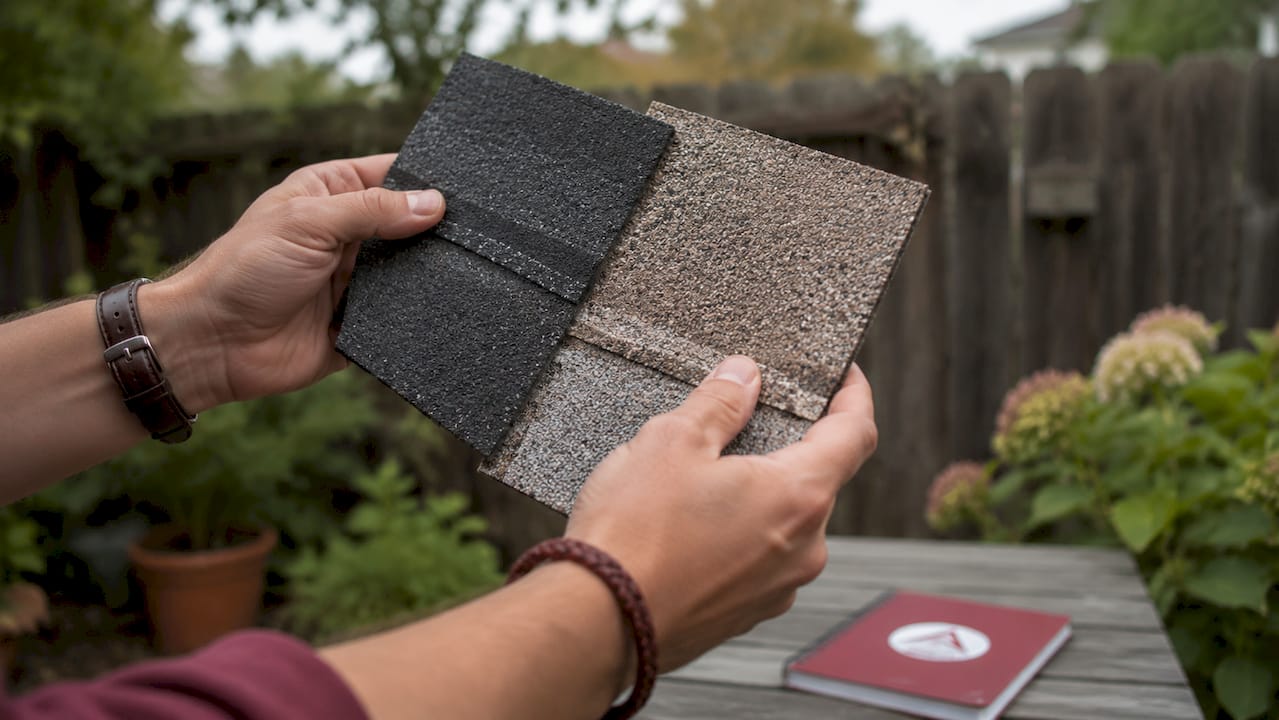
The eight variables that matter most in any roofing bid analysis are shingle tier and brand, underlayment type, tear-off versus overlay, flashing replacement, ventilation work, decking repair pricing method, warranty terms, and ice-and-water shield coverage. Each one affects both the project's upfront cost and its long-term performance.
Use this framework to standardize your roofing estimate comparison:
| Bid Variable | What to Look For | Red Flag |
|---|---|---|
| Shingle tier | GAF Timberline HDZ, CertainTeed Landmark, or equivalent | "Standard 3-tab shingles" with no brand specified |
| Underlayment | Synthetic felt (30 lb equivalent or better) | Felt 15 lb or no specification at all |
| Tear-off | Full removal of existing layers | Overlay on top of existing shingles |
| Flashing | Full replacement at valleys, pipes, and walls | "Reuse existing flashing" |
| Ventilation | Ridge vent plus intake balance noted | No mention of ventilation |
| Decking repair | Per-sheet or per-square-foot pricing stated | Flat allowance with no unit price |
| Warranty | Manufacturer product warranty plus workmanship term | Workmanship warranty under 5 years |
| Ice and water shield | Coverage at eaves, valleys, and all penetrations | No mention or minimum coverage only |
Decking repair pricing deserves special attention. Some contractors include a flat allowance, say $200, while others price per sheet of plywood. Decking repair pricing method can significantly change your final bill after tear-off reveals hidden rot. Always ask for the unit price, not just an allowance.

Warranties vary widely across manufacturer coverage, workmanship duration, prorated versus non-prorated terms, and transferability to future buyers. A 50-year manufacturer warranty paired with a 2-year workmanship guarantee is far weaker than a 30-year manufacturer warranty backed by a 20-year workmanship guarantee. The workmanship term is what actually protects you from installation defects.
Pro Tip: Ask every contractor to specify whether their ice-and-water shield covers eaves, valleys, and all roof penetrations. Inadequate ice-and-water shield application causes premature failures even when shingles are identical across bids. This single line item separates thorough contractors from those cutting corners.
How do Washington State permits and codes affect roofing bids?
Washington State roofing bids carry regulatory requirements that do not apply in every other state, and those requirements directly affect project scope and cost. Washington L&I contractor licensing under RCW 18.27 is mandatory statewide. Any contractor bidding your project must be licensed, bonded, and insured. Verifying this before accepting a bid is non-negotiable.
Permit requirements in Washington depend on what work is actually being done. Seattle SDCI and state codes define the triggers clearly:
- No permit required: Like-for-like shingle replacement on an existing roof without structural changes.
- Permit required: Decking replacement, structural repairs, skylight additions, or any change to roof framing.
- Always required regardless of permit status: Ice-and-water shield at eaves and other vulnerable areas per Washington energy and building codes.
Typical roofing costs in Seattle range from $8 to $15 per square foot installed, with average projects landing between $14,000 and $28,000 depending on scope, material upgrades, and permit fees. That range illustrates why permit-triggering work like decking replacement can push a bid significantly higher than a simple shingle swap.
For homeowners in Kirkland, Bothell, Redmond, and Bellevue, local jurisdictions may have amendments beyond the state baseline. Always verify permit requirements directly with your city's building department before finalizing a contractor. A bid that excludes required permits is not a savings. It is a liability. You can find more detail on King County permit requirements for Eastside homeowners in our 2026 guide.
How to create an apples-to-apples roofing bid comparison
Standardizing your roofing bid analysis before you collect a single estimate is the most effective way to protect your investment. Standardizing bid comparisons empowers homeowners to negotiate better prices and avoid hidden costs. Here is how to do it systematically:
-
Prepare your scope baseline document. Write down your roof's total square footage, current material type, known issues such as soft spots or leaking areas, and your preferred shingle brand and tier. Share this with every contractor before they visit.
-
Request fully itemized bids. Tell each contractor you need line-item pricing, not a single total. Any contractor unwilling to provide this is not a contractor you want on your roof.
-
Build a comparison spreadsheet. Use the eight variables from the table above as column headers. Fill in each contractor's response for every variable. Gaps in the spreadsheet are gaps in the scope.
-
Weight your criteria. Material quality and warranty terms typically matter more than a $500 price difference. Assign relative importance to each variable based on your priorities, such as longevity, resale value, or budget.
-
Ask contractors to clarify vague items. If a bid says "flashing as needed," ask what that means in writing. Vague language in a contract becomes a dispute after the job starts.
-
Negotiate with transparency. If Contractor A offers a better warranty but Contractor B is $1,200 cheaper, ask Contractor A whether they can match the price given identical scope. Low bids often exclude key work like decking repair or use builder-grade materials, so make sure you are comparing equivalent scopes before negotiating on price.
A standard upfront deposit is 10% or $1,000, whichever is lower. BBB guidelines support limiting initial payments to protect against contractor risk. Any contractor demanding 30% to 50% upfront before work begins is a warning sign worth taking seriously. For more guidance on questions to ask contractors before signing, Atraxroofandgutter has a dedicated resource for Washington homeowners.
Key takeaways
Comparing roofing bids as a true investment requires evaluating scope, materials, warranty terms, and Washington permit compliance, not just total price.
| Point | Details |
|---|---|
| Get 3 to 4 bids | This range establishes a market baseline and exposes outliers without creating decision overload. |
| Scope drives price variance | Price spreads of 50% to 100% come from scope differences, not contractor markup. |
| Permits affect bid validity | Work involving decking, structural repairs, or skylights requires permits in Washington State. |
| Warranty terms define value | A 20-year workmanship warranty outweighs a longer manufacturer warranty with weak labor coverage. |
| Standardize before comparing | A scope baseline document given to all contractors collapses variance and enables honest negotiation. |
What I've learned from a decade of roofing bids in Washington
After more than ten years working with Washington homeowners on roofing projects across Kirkland, Bellevue, Seattle, and Bothell, the pattern I see most often is this: homeowners spend weeks researching shingle brands and almost no time reading the actual bid document. That imbalance costs them money.
The most common misconception I encounter is that a detailed bid means a higher price. The opposite is true. Contractors who itemize every line are the ones who have priced the job accurately. Vague bids hide assumptions, and those assumptions become change orders after the tear-off starts.
Washington's wet climate makes ice-and-water shield coverage and proper ventilation non-negotiable. I have seen roofs fail within five years because a contractor skipped the ice-and-water shield at penetrations to save $300. That $300 shortcut turned into a $4,000 repair. When you read and compare roofing estimates carefully, you catch these omissions before they become your problem.
My honest advice: do not rush the bid process because you want the project done before the rainy season. A two-week delay to collect proper bids and verify licensing is always worth it. Seasonal timing matters, but signing a bad contract to beat the weather is a trade-off that rarely ends well. Ask for written documentation at every stage, from the initial scope to the final inspection sign-off. Your roof protects everything inside your home. It deserves the same diligence you would give any major financial decision.
— Danyllo
Ready to get a transparent roofing bid from Atraxroofandgutter?
Washington homeowners deserve bids that are honest, detailed, and fully compliant with local permitting requirements. Atraxroofandgutter has served Kirkland, Bothell, Redmond, Bellevue, Seattle, and surrounding communities for over ten years, using only premium GAF and CertainTeed materials backed by a 20-year workmanship warranty.
Every Atraxroofandgutter proposal is fully itemized, covering shingle tier, underlayment, flashing, ventilation, decking repair pricing, and warranty terms. No lump sums. No surprises. If budget timing is a concern, explore our roofing financing options designed to make quality roofing accessible without compromising on scope or materials. You can also browse our completed project portfolio to see the quality we deliver on every job. Contact Atraxroofandgutter today for a free, no-obligation consultation.
FAQ
How many roofing bids should a Washington homeowner get?
Three to four bids is the recommended range for most residential roofing projects. This number provides a reliable market baseline and makes it easy to identify outliers without overwhelming the decision process.
What is the most important factor when comparing roofing bids?
Scope alignment matters more than total price. Bids that exclude flashing replacement, use builder-grade underlayment, or omit ice-and-water shield coverage will appear cheaper but cost more over time.
Do I need a permit for roof replacement in Seattle or Washington State?
Like-for-like shingle replacements typically do not require a permit in Seattle and most Washington jurisdictions. However, decking replacement, structural repairs, and skylight additions do trigger permit requirements under SDCI and state building codes.
What is a fair upfront deposit for a roofing contractor?
A standard upfront deposit is 10% of the project total or $1,000, whichever is lower. Requests for 30% to 50% upfront before any work begins are a recognized warning sign according to BBB guidelines.
How do I verify a Washington roofing contractor's license?
Washington L&I maintains a public contractor license lookup under RCW 18.27. Every roofing contractor working in Washington must be licensed, bonded, and insured. Verify this before signing any contract.