
Washington homeowners know the anxiety of discovering a leak after a heavy rain or spotting curling shingles after a windstorm. The costs that follow can feel like a gut punch. But there are real, proven ways to reduce roof repair costs without sacrificing the protection your home and family depend on. This guide covers everything from knowing when to repair versus replace, to negotiating smarter with contractors, to the low-cost maintenance habits that prevent the big bills from showing up in the first place.
Table of Contents
- Key takeaways
- How to reduce roof repair costs by knowing when to repair or replace
- How to negotiate roof repair costs with your contractor
- Cheap maintenance tips that prevent expensive repairs
- Common mistakes that drive roof repair costs up
- My honest take on cutting roofing costs the right way
- Get honest, affordable roof repair help from Atraxroofandgutter
- FAQ
Key takeaways
| Point | Details |
|---|---|
| Repair vs. replace threshold | If repair costs exceed 30% of full replacement cost, replacement is typically the smarter financial move. |
| Negotiate specifications, not just price | Focus negotiations on material quality and warranties, not just the bottom-line number. |
| Preventive maintenance saves money | Clearing gutters, fixing minor leaks early, and scheduling annual inspections dramatically cut long-term expenses. |
| Avoid DIY patches | Temporary patches last only 1 to 5 years and often cause more costly water damage later. |
| Get itemized bids | Line-item quotes reveal where price gaps come from and protect you from vague, inflated estimates. |
How to reduce roof repair costs by knowing when to repair or replace
The most expensive mistake a homeowner can make is pouring money into repairs on a roof that should be replaced. Washington's climate is tough on roofs. Persistent rain, moisture, and occasional freezing temperatures accelerate wear in ways that many homeowners underestimate.
Start with an honest assessment of your roof's age and condition. Most asphalt shingle roofs last 20 to 30 years. If yours is pushing past 15 years and you are dealing with recurring leaks, widespread granule loss, or sagging sections, the math may not favor another round of repairs. The 30% repair rule is a widely accepted industry standard: if your repair estimate exceeds 30% of what a full replacement would cost, replacement is typically the better long-term financial choice. The 50% threshold goes further. When repair costs on an aging roof climb past half the replacement value, most roofing professionals consider full replacement not just sensible but necessary to avoid cascading failures.
Here is a quick comparison to help you think through common scenarios:
| Situation | Likely best option | Why |
|---|---|---|
| Single damaged area, roof under 15 years old | Repair | Isolated issue, roof has years of life left |
| Multiple leaks, roof over 20 years old | Replace | Widespread failure risk, repair costs add up fast |
| Repair estimate is 25% of replacement cost | Repair | Cost-effective with remaining roof life |
| Repair estimate is 45% of replacement cost | Replace | Better long-term value and warranty coverage |
| Flat roof with surface cracking only | Coating or repair | Professional coatings can extend life significantly |
For flat roof homeowners in Washington, the calculus is slightly different. Flat roof coatings reduce long-term repair costs by sealing minor cracks and preventing structural damage before they escalate. This is often a cost-effective middle ground between a patch and a full tear-off.
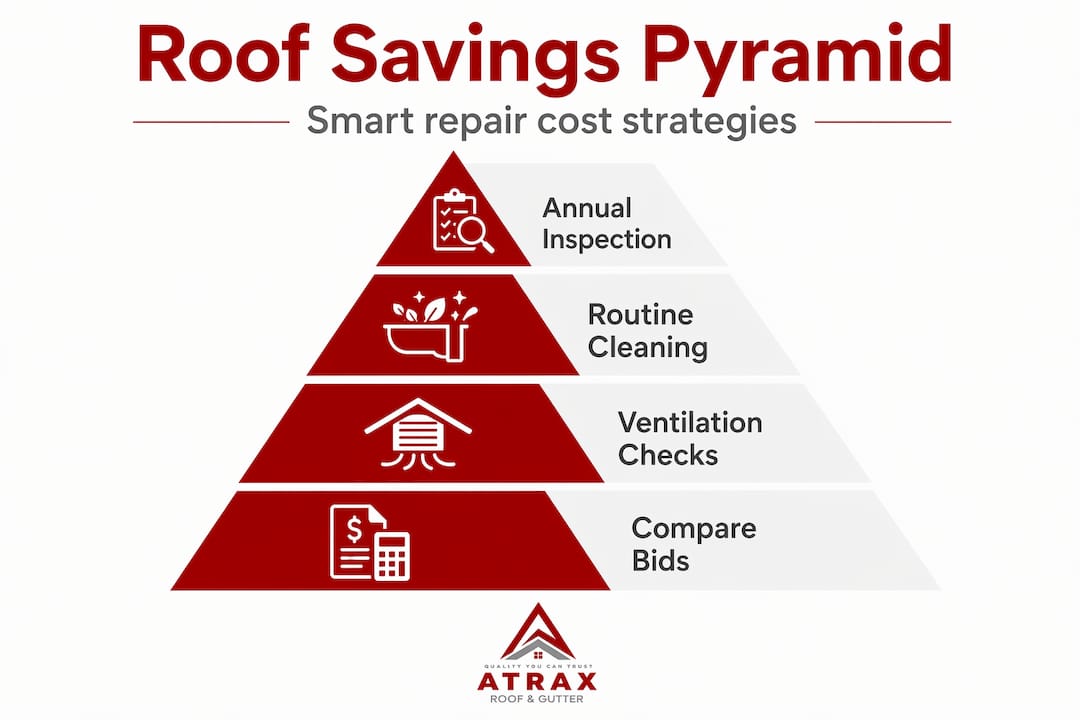
Pro Tip: When comparing bids, always request itemized, line-by-line quotes. Quote prices can vary by 30 to 50% between contractors for identical scopes of work, and that gap usually reflects overhead and profit margins, not quality differences. An itemized bid lets you compare apples to apples.
For detailed current pricing on common repairs in the area, Atraxroofandgutter has a breakdown of Eastside WA repair costs that gives you realistic numbers before you call anyone.
How to negotiate roof repair costs with your contractor
Most homeowners approach contractor negotiations the wrong way. They focus entirely on price, pushing for the lowest number possible. The problem is that a contractor who agrees to a rock-bottom price almost always gets there by cutting somewhere, and that somewhere is usually the materials or the labor quality you cannot see.
Smart negotiation focuses on specifications, not just the total dollar amount. Here is how to do it effectively:
- Ask about underlayment quality. Synthetic underlayments outperform traditional felt in wet climates. If a contractor defaults to 15-pound felt, ask whether upgrading to a synthetic option changes the price and by how much. The performance difference in Washington's rain season is significant.
- Discuss fastener type. Stainless steel fasteners resist corrosion far better than galvanized ones. In a high-moisture environment, this matters for longevity. Ask specifically what will be used and get it in writing.
- Clarify flashing methods. Step flashing and counter-flashing at chimneys and walls are where leaks commonly originate. A contractor who mentions these details without prompting is showing you their standards. One who glosses over them deserves follow-up questions.
- Require a workmanship warranty. Material warranties from manufacturers only cover defects in the product itself. A workmanship warranty covers installation errors, which is where most problems actually start. Confirm the length and what it covers before signing anything.
- Check for manufacturer certifications. Contractors certified by manufacturers like GAF or CertainTeed have met training requirements that unlicensed operators skip. Certification also unlocks enhanced warranty programs that add real value.
Paying in cash can also work in your favor. Cash payments can secure discounts of 10 to 16% with many contractors because they eliminate transaction fees and reduce administrative burden. Ask upfront whether your contractor offers a cash discount before committing to a payment method.
Pro Tip: Get at least three bids before making a decision. If one bid is dramatically lower than the other two, treat it as a warning, not a win. Ask that contractor specifically what they are excluding from their scope.
Washington homeowners also need to think about attic ventilation when discussing repairs. Poor ventilation causes ice dams in colder months and accelerates shingle deterioration year-round. A contractor who addresses ventilation as part of a repair is delivering better long-term value than one who only patches the visible problem.
Cheap maintenance tips that prevent expensive repairs
Preventive care is the most underutilized roof repair savings strategy available to homeowners. The cost of a gutter cleaning or a quick inspection is almost always a fraction of what you will pay when a neglected issue becomes a major repair.
Here is what a practical, affordable maintenance routine looks like for a Washington home:
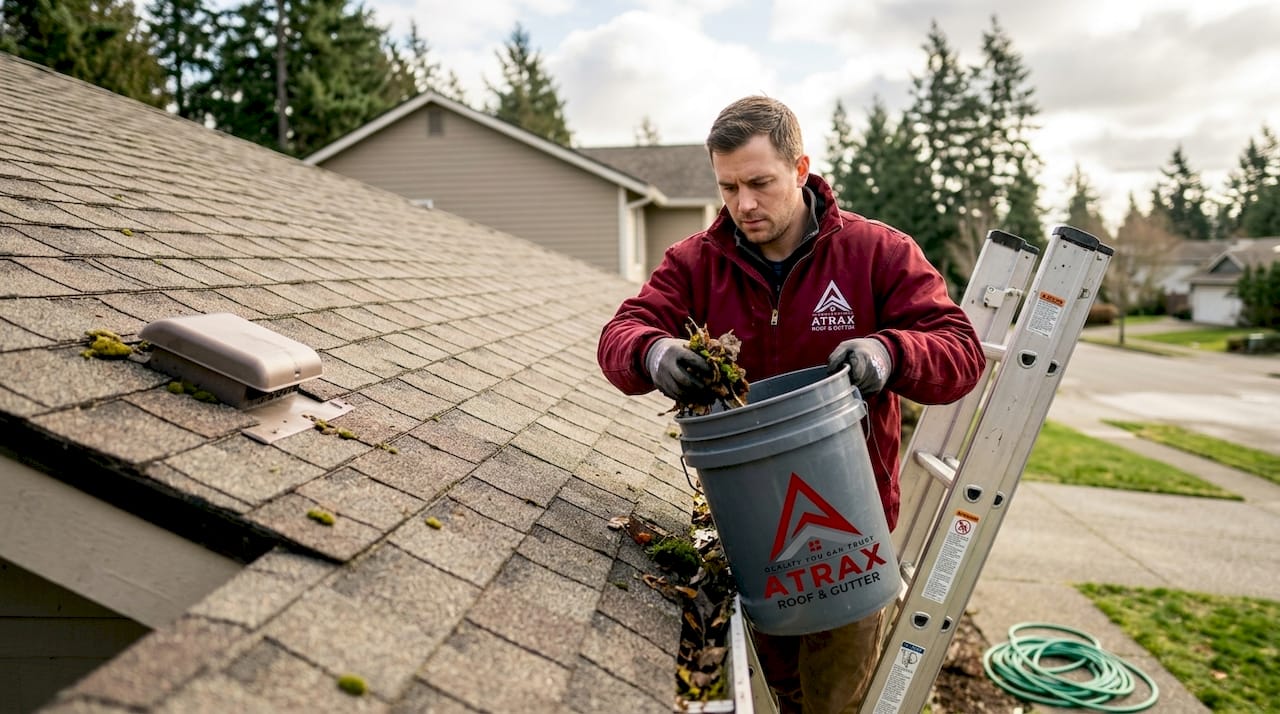
- Clear gutters twice a year. Blocked gutters back water up under shingles and against fascia boards. In Washington, where leaves accumulate fast in fall and moss growth is common, twice a year is the minimum. After major storms, check for blockages as well.
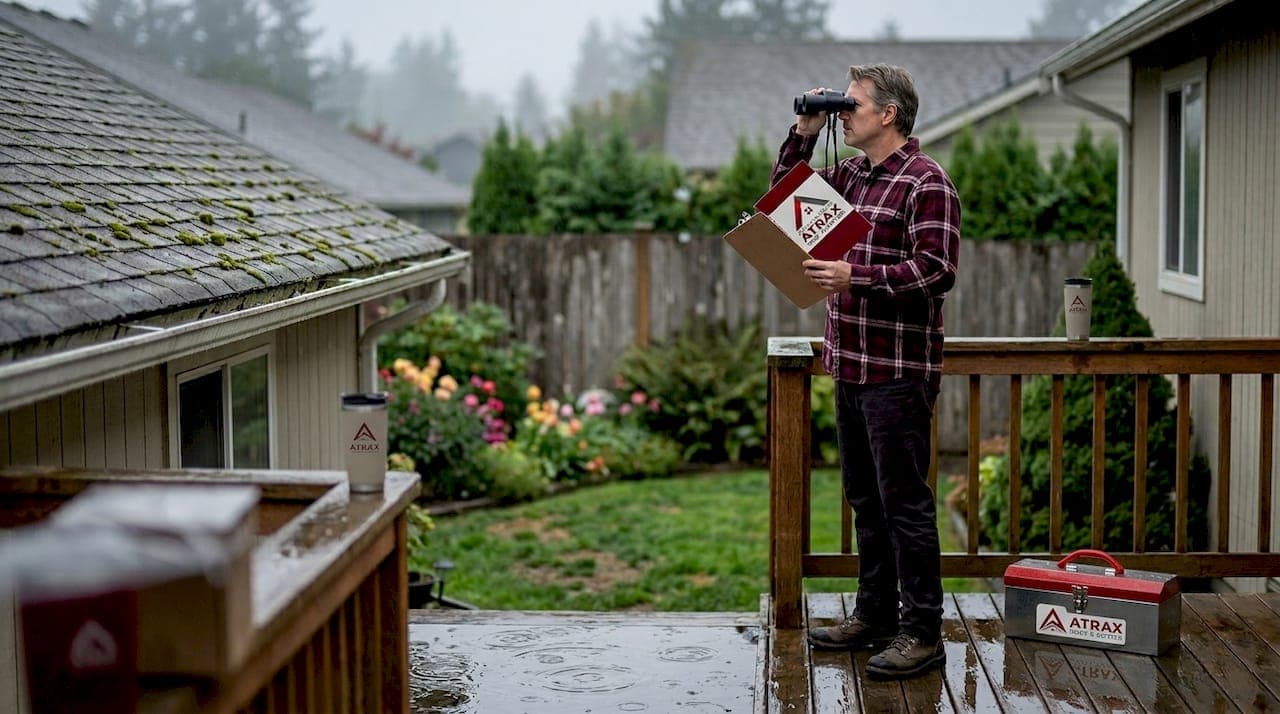
- Inspect after every major weather event. You do not need a ladder for this. Walk your property and look for dislodged shingles, debris accumulation in valleys, or any visible sagging. Binoculars work fine for a ground-level check.
- Treat moss and algae early. Moss is not just cosmetic in the Pacific Northwest. It retains moisture against shingles and accelerates breakdown. Zinc strips near the ridge or diluted zinc sulfate treatments are low-cost options that prevent growth without damaging your roof.
- Check attic insulation and ventilation annually. This protects against moisture buildup from the inside, which is just as damaging as water from the outside.
- Fix minor leaks immediately. A small drip in a consistent location almost always traces back to a specific, localized failure. Addressing it fast costs far less than waiting until the water has damaged sheathing or interior ceilings.
For flat roof homeowners, professional coatings simplify maintenance and extend roof life by creating a durable, waterproof surface that resists UV breakdown and pooling water. In Washington, where flat or low-slope roofs accumulate standing water after rainstorms, this is one of the most cost-effective investments available.
| Maintenance task | Frequency | Estimated cost | Potential savings |
|---|---|---|---|
| Gutter cleaning | 2x per year | $100 to $200 | Prevents $500 to $3,000 fascia and leak repairs |
| Moss treatment | Annual | $50 to $150 | Extends shingle life by years |
| Professional inspection | Annual | $150 to $300 | Early detection of $2,000 to $10,000 issues |
| Flat roof coating | Every 5 to 10 years | $1,000 to $3,500 | Delays full replacement by 10 to 15 years |
Atraxroofandgutter has a detailed guide on roof maintenance after replacement that walks through exactly what to watch for and when to call in a professional.
Common mistakes that drive roof repair costs up
Avoiding bad decisions is just as important as making good ones. These mistakes regularly turn manageable repairs into expensive projects.
- Accepting vague quotes. A one-line estimate that says "repair roof, $1,200" tells you nothing about what is included. When the work is done, you have no basis to verify what was completed or challenge unexpected add-ons.
- Hiring unlicensed contractors. The short-term savings dissolve quickly when the workmanship fails. In Washington State, roofing contractors must be licensed and bonded. Hiring someone who is not puts you on the hook for any injuries on your property and leaves you with no recourse if the work is substandard.
- Patching it yourself. DIY roof patches using roofing cement or interior caulk typically last one to five years at best. In Washington's freeze-thaw cycles, they often fail faster. Water that gets through a failed patch reaches your sheathing and framing, turning a $300 repair into a $4,000 project.
- Trusting "free inspection" sales pitches. Some contractors use free inspections as a vehicle to oversell damage. If an inspector shows up and immediately identifies thousands of dollars in repairs with photos you cannot verify, get a second opinion before agreeing to anything.
"The bitterness of poor quality remains long after the sweetness of low price is forgotten." This applies to roofing more directly than almost any other home system.
Avoiding these mistakes consistently is one of the most reliable roof repair savings strategies you have available. Paired with good maintenance habits and a thoughtful contractor selection process, you can protect your budget without compromising your home.
My honest take on cutting roofing costs the right way
I have spent over a decade working on roofs across Kirkland, Bothell, Bellevue, Redmond, and Seattle. In that time, I have seen the same pattern repeat itself more times than I can count. A homeowner calls because they need a repair. I arrive and find two or three previous patches, each one hiding a problem the last contractor failed to fix properly. By the time the real scope is clear, what should have been a $600 repair is now a $4,000 job.
My honest view is this: most homeowners are not losing money because roofing is expensive. They are losing money because they make decisions under pressure without enough information. They accept the first bid that sounds reasonable, skip the maintenance because life is busy, and trust a contractor based on a low price rather than verified credentials.
The most effective way to lower roofing expenses over your lifetime as a homeowner is to stop thinking about each repair as an isolated transaction. Think about your roof as a system. Washington's climate demands quality underlayments, proper ventilation, and flashing that is installed with care. A roof that is built or repaired to those standards will outlast one that was "fixed" cheaply by years, sometimes decades.
I also want to be direct about negotiation. Pushing a contractor below a fair margin does not benefit you. It creates an incentive to cut corners. What you want is a contractor who is transparent about specifications, gives you a detailed scope in writing, and backs their work with a real warranty. That is where your leverage should go, not into shaving $200 off the total.
— Danyllo
Get honest, affordable roof repair help from Atraxroofandgutter
If you are a Washington homeowner looking for a roofing partner who gives you straight answers and detailed, no-surprise quotes, Atraxroofandgutter is ready to help. Founded by Danyllo Silva with over 10 years of experience serving Kirkland, Bothell, Redmond, Bellevue, and Seattle, the company is built on honest communication and premium materials from GAF and CertainTeed. Every job is backed by a 20-year workmanship warranty and a 100% satisfaction guarantee.
You can explore roof repair services or check available financing options to manage repair costs without stress. See completed projects in the Atraxroofandgutter portfolio to understand the quality you can expect. Contact Atraxroofandgutter today for a free, itemized quote with no pressure and no surprises.
FAQ
When does roof repair cost more than replacement?
When repair costs exceed 30% of a full replacement estimate, replacement is generally the better financial decision. On roofs older than 15 to 20 years, the 50% threshold is widely used by roofing professionals.
How can I negotiate lower roofing costs without sacrificing quality?
Focus on material specifications such as underlayment type, fastener material, and flashing methods rather than simply pushing for a lower price. Asking for a detailed scope in writing and requesting a workmanship warranty protects you far more than a small discount.
Do DIY roof patches actually save money?
Rarely. Temporary DIY patches typically last one to five years and often trap moisture against sheathing, leading to wood rot and interior damage that costs far more to fix than a professional repair would have.
What is the cheapest way to extend my roof's lifespan?
Regular gutter cleaning, annual moss treatments, and a professional inspection once a year are the lowest-cost habits with the highest return. Catching a small problem early almost always costs a fraction of what it costs once the damage spreads.
Are flat roof coatings worth the cost for Washington homeowners?
Yes. Professional flat roof coatings seal surface cracks and protect against standing water, which is a constant concern in Washington's wet climate. They can delay a full replacement by 10 to 15 years when applied before serious damage sets in.