
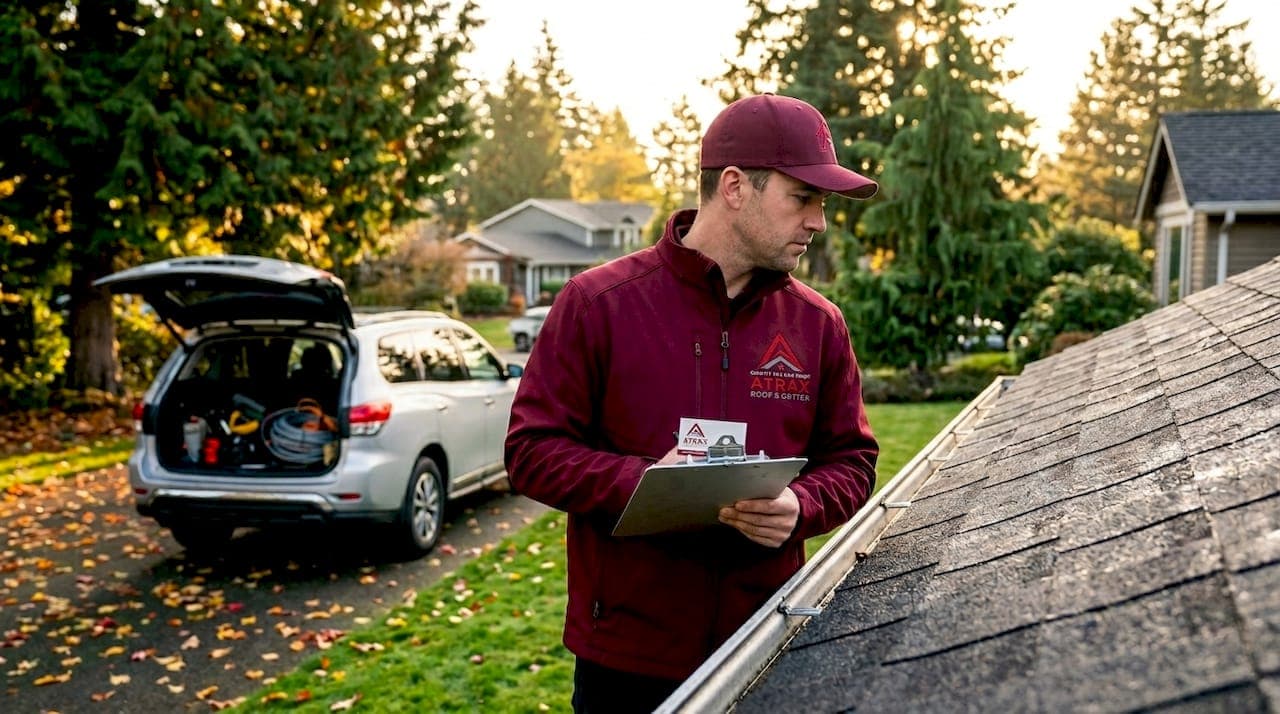
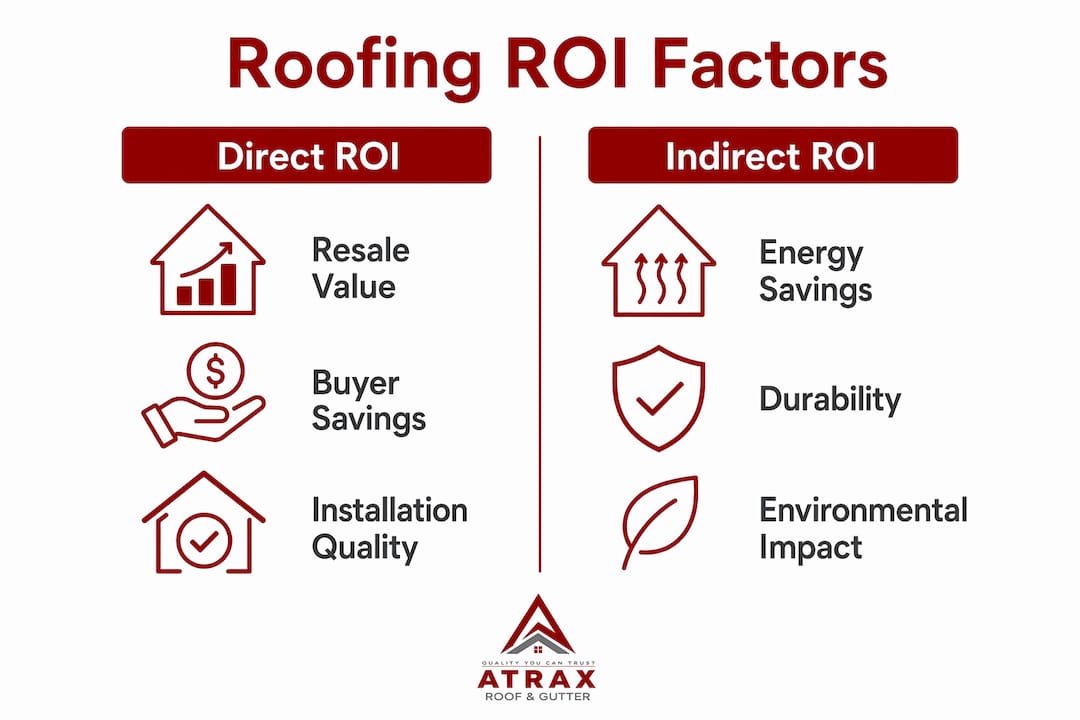
Roofing ROI is defined as the ratio of financial value returned to total cost invested in a roofing project, combining direct resale gains, energy savings, avoided repair costs, and risk reduction. For Washington homeowners and real estate investors, understanding roofing ROI means looking beyond the sticker price of a new roof and calculating the full picture of what that investment returns. With Washington roof replacements averaging $14,000 to $19,500 per project, the stakes are real and the math matters. This article breaks down every layer of roofing investment returns so you can make a confident, informed decision.
What is the typical direct resale ROI for a new roof in Washington?
A new asphalt shingle roof returns 61 to 68% of its installed cost in resale value at the time of sale. That means a $16,000 roof replacement translates to roughly $9,760 to $10,880 in added home value. It is not a dollar-for-dollar return, but it is one of the strongest resale multipliers among common home improvement projects.
Washington state adds its own cost layer. Labor and moisture-mitigation requirements push local rates to $6.70 to $7.90 per square foot, which is higher than the national average. That cost pressure makes material selection and installation quality even more critical to protecting your return.
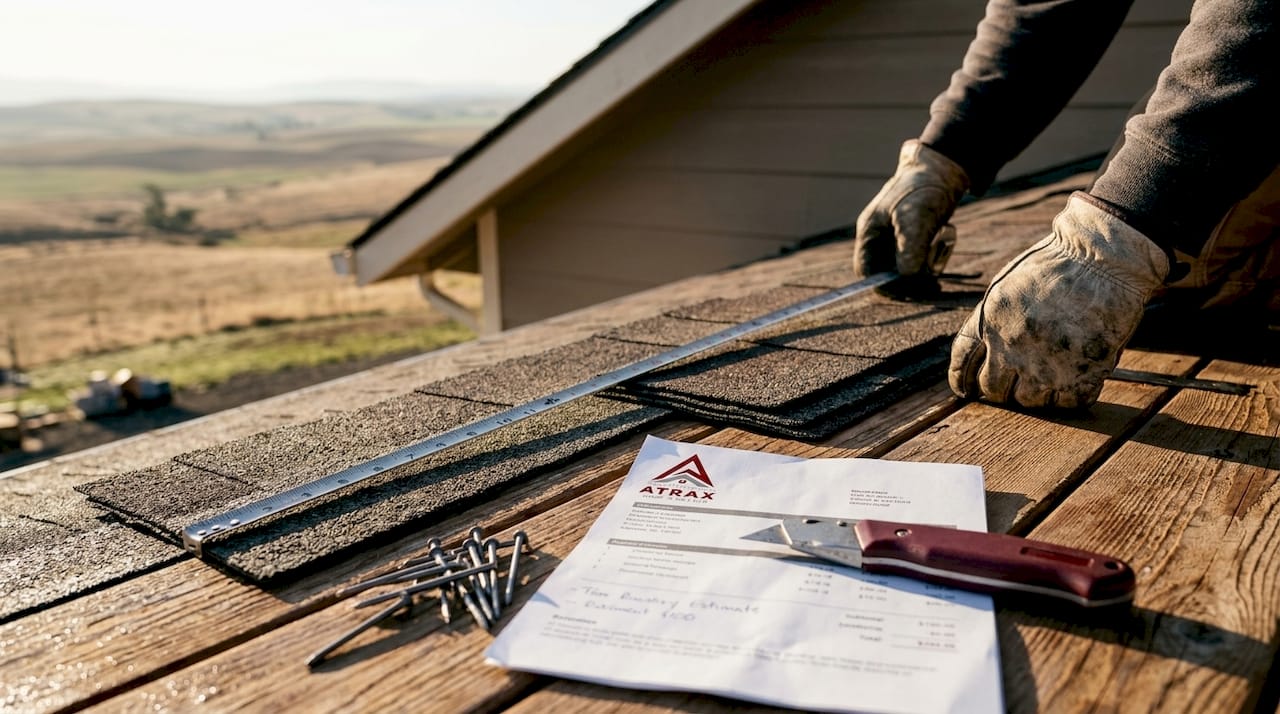
The table below compares common roofing materials by typical cost, resale value added, and estimated direct ROI for a Washington home:
| Material | Typical installed cost | Estimated resale value added | Direct ROI |
|---|---|---|---|
| Asphalt shingles (GAF, CertainTeed) | $14,000–$19,500 | $8,500–$13,000 | 61–68% |
| Metal roofing (standing seam) | $18,000–$30,000 | $11,000–$20,000 | 60–70% |
| Premium architectural shingles | $16,000–$22,000 | $10,000–$15,000 | 63–68% |
Metal roofs return about 60 to 70% of installation cost in resale value, comparable to asphalt but with added durability and energy benefits that compound over time. For investors holding properties long term, that compounding effect changes the ROI calculation significantly.
Pro Tip: Quality installation from a licensed contractor matters more than material brand alone. A premium GAF shingle installed poorly will underperform a standard shingle installed correctly, both in durability and in appraisal value.
How do indirect benefits affect your roofing ROI beyond resale value?
The direct resale figure is only part of the story. Indirect ROI from avoided concessions and faster sales often surpasses the appraisal value uplift, and most homeowners never factor this in.
Here is what a failing roof actually costs you during a sale:
- Buyers routinely request $5,000 to $15,000 in roof credits after a home inspection flags an aging or damaged roof.
- Lenders including FHA and VA loan programs can reject appraisals or require repairs before closing when roof condition is poor, delaying or killing deals entirely.
- A new roof speeds up the sale timeline by 2 to 4 days on average, reducing carrying costs like mortgage payments, property taxes, and utilities during the listing period.
- In Washington's inspection-driven market, roof condition is one of the most scrutinized items. Buyers here know the climate and they ask about the roof first.
The practical implication is clear. A homeowner who spends $16,000 on a new roof before listing and avoids a $10,000 buyer concession has effectively recovered 62.5% of the project cost before the appraisal value increase is even counted. Add the appraisal uplift and the combined effective ROI climbs well above the headline 61 to 68% figure.
Pro Tip: Replace your roof at least 60 days before listing your home. This gives the installation time to settle, allows you to document the warranty, and removes the roof from the inspection report entirely.
What role do energy savings and material choices play in roofing ROI?
Energy efficiency is the ROI factor most homeowners underestimate. ENERGY STAR-qualified cool roofs save 7 to 15% on total annual building energy costs, depending on climate and roof assembly. Washington's mixed climate moderates those savings compared to hot southern states, but the benefit is real and it compounds annually.
The table below shows estimated annual energy savings by material and climate type:
| Roof material | Climate type | Estimated annual energy savings |
|---|---|---|
| ENERGY STAR cool roof coating | Hot/sunny | 10–15% |
| Reflective metal roof | Mixed (Pacific Northwest) | 7–12% |
| Standard asphalt shingles | Mixed (Pacific Northwest) | 2–5% |
| Premium architectural shingles | Mixed (Pacific Northwest) | 3–6% |
For rental property investors, these savings should be modeled as cash flows over the holding period rather than treated as a one-time benefit. Small annual savings of $400 to $800 per year compound materially over a 15 to 30-year holding period and affect the net present value of the investment.
Washington also has specific environmental considerations. Roof material runoff can release trace metals into local waterways, including Puget Sound. Asphalt shingles show low concentrations, but some specialty materials carry higher environmental risk. For investors concerned with compliance and community standards, lifecycle environmental impact is part of the full ROI picture.
Pro Tip: Evaluate lifecycle cost, not just upfront cost. A metal roof that costs $8,000 more than asphalt but lasts 20 years longer and saves $600 per year in energy costs will outperform asphalt on total ROI for long-term holders.
How to calculate roofing ROI for your Washington property
Calculating roofing ROI follows a straightforward formula, but the inputs require local knowledge to be accurate. Here is a step-by-step method:
- Establish your total project cost. Get itemized quotes from licensed Washington contractors. Use the roofing estimates guide to understand what each line item covers and where costs vary by region.
- Estimate direct resale value increase. Apply the 61 to 68% multiplier for asphalt shingles or 60 to 70% for metal roofing to your total project cost. This is your baseline direct ROI.
- Add indirect ROI from avoided concessions. If your current roof would likely trigger a buyer credit, add $5,000 to $15,000 to your effective return. Be conservative and use $5,000 unless your roof is visibly failing.
- Factor in energy savings over your holding period. Multiply estimated annual savings by the number of years you plan to hold the property. For a rental, discount those future cash flows to present value using a 5 to 7% discount rate.
- Account for avoided repair costs. Delaying roof replacement risks larger project scopes, higher costs, and reduced ROI due to inspection and insurance complications. A proactive replacement at $16,000 today often costs far less than a reactive replacement at $22,000 after water damage has spread.
- Divide total value returned by total cost invested. Expressed as a percentage, this is your full roofing ROI.
For a practical example: a Kirkland homeowner spends $17,000 on a GAF architectural shingle roof. Direct resale value adds $10,880 (64%). Avoided buyer concession saves $8,000. Annual energy savings of $500 over 10 years adds $5,000. Total value returned: $23,880. Total ROI: 140%. That number is not unusual for Washington properties when all factors are counted.
Pro Tip: Do not wait for a leak to trigger your replacement decision. Proactive replacement on your timeline gives you contractor choice, material selection, and pricing leverage. Emergency replacements cost more and return less.
Comparing roofing materials: what affects your long-term ROI?
Material choice shapes both upfront cost and long-term value. In Washington, the Pacific Northwest climate adds specific performance requirements that narrow the optimal choices.
Asphalt shingles from GAF or CertainTeed remain the most common choice because they balance cost, performance, and buyer familiarity. Architectural shingles outperform three-tab in both durability and perceived value. Metal roofing, particularly standing seam, offers superior longevity and weather resistance but carries a higher upfront cost that requires a longer holding period to justify on ROI alone.
Several factors specific to Washington affect material performance and ROI:
- Moss and algae growth on north-facing and shaded roof sections reduce shingle lifespan by 5 to 10 years without treatment. Algae-resistant shingles with copper granules, available through GAF and CertainTeed, address this directly.
- High annual rainfall means flashing, underlayment, and ventilation quality matter as much as the shingle itself. A premium shingle on a poorly ventilated deck will fail prematurely.
- Insurance carriers in Washington increasingly factor roof age and material into premium calculations. A new metal or premium shingle roof can reduce annual premiums, adding another income stream to the ROI calculation.
Pro Tip: Match your roofing material to your neighborhood. A standing seam metal roof on a $350,000 home in a neighborhood of asphalt-shingled houses will not return its premium cost at resale. Buyers pay for neighborhood norms, not outliers.
Key takeaways
Roofing ROI in Washington combines direct resale value, avoided buyer concessions, energy savings, and risk reduction into a total return that regularly exceeds 100% when all factors are counted.
| Point | Details |
|---|---|
| Direct resale ROI | New asphalt roofs return 61 to 68% of cost in resale value; metal roofs return 60 to 70%. |
| Indirect ROI matters most | Avoided buyer concessions of $5,000 to $15,000 often exceed the direct appraisal uplift. |
| Energy savings compound | ENERGY STAR roofs save 7 to 15% annually; model these as cash flows for rental ROI. |
| Timing reduces cost | Proactive replacement costs less and returns more than reactive emergency replacement. |
| Material must match market | Choose materials that align with neighborhood norms and Washington climate requirements. |
What I've learned about roofing ROI after 10 years in Washington
Most homeowners focus on the wrong number. They see 61 to 68% direct ROI and think a new roof is a losing investment. What they miss is that the total financial picture, including avoided concessions, faster sales, energy savings, and eliminated repair risk, routinely pushes effective ROI well above 100% in Washington markets like Bellevue, Kirkland, and Redmond.
Washington's climate is unforgiving. Moisture gets into everything. A roof that is five years past its service life is not just an aesthetic issue. It is a liability that buyers, inspectors, and lenders will price against you. I have seen deals fall apart over roofs that the seller thought were "fine." They were not fine. They were just dry on the day of the showing.
The other thing I tell every homeowner: the quality of the installation determines more of your ROI than the brand of the shingle. In Washington's wet, inspection-driven market, roof condition is what appraisers and buyers actually respond to. A flawlessly installed standard shingle will outperform a premium shingle with poor flashing and inadequate ventilation every single time. Choose your contractor as carefully as you choose your material.
— Danyllo
How Atraxroofandgutter helps you protect your roofing investment
Atraxroofandgutter serves Kirkland, Bothell, Redmond, Bellevue, Seattle, and surrounding communities with licensed, bonded, and insured roofing installations using premium GAF and CertainTeed materials. Every project is backed by a 20-year workmanship warranty and a 100% satisfaction guarantee. Founder Danyllo Silva built this company on honest communication and flawless workmanship, so you know exactly what you are getting before work begins. Atraxroofandgutter also recycles 90% of removed materials, keeping your project environmentally responsible. Explore roofing financing options to manage upfront costs without delaying your investment. View the completed project portfolio to see real Washington installations. Contact Atraxroofandgutter today for a no-surprise quote and start maximizing your roofing ROI.
FAQ
What is roofing ROI and how is it calculated?
Roofing ROI is the total financial return from a roofing investment divided by the project cost, expressed as a percentage. It includes direct resale value increase, avoided buyer concessions, energy savings, and reduced repair risk.
Is a new roof a good investment before selling in Washington?
A new roof is one of the strongest pre-sale investments in Washington because it eliminates inspection issues, avoids buyer concessions of $5,000 to $15,000, and adds direct resale value of 61 to 68% of project cost.
Which roofing material offers the best ROI in Washington?
Asphalt shingles from GAF or CertainTeed offer the best balance of cost and resale ROI for most Washington homeowners. Metal roofing delivers comparable direct ROI with added longevity and energy savings that benefit long-term holders and rental investors.
How much does a roof replacement cost in Washington state?
Washington roof replacements average $14,000 to $19,500 for a typical home, at $6.70 to $7.90 per square foot, driven by moisture-mitigation requirements and local labor market conditions.
How do energy savings factor into roofing ROI for rental properties?
ENERGY STAR-qualified roofs save 7 to 15% on annual energy costs, and for rental investors those savings should be modeled as annual cash flows discounted over the holding period to calculate their true contribution to net present value.