
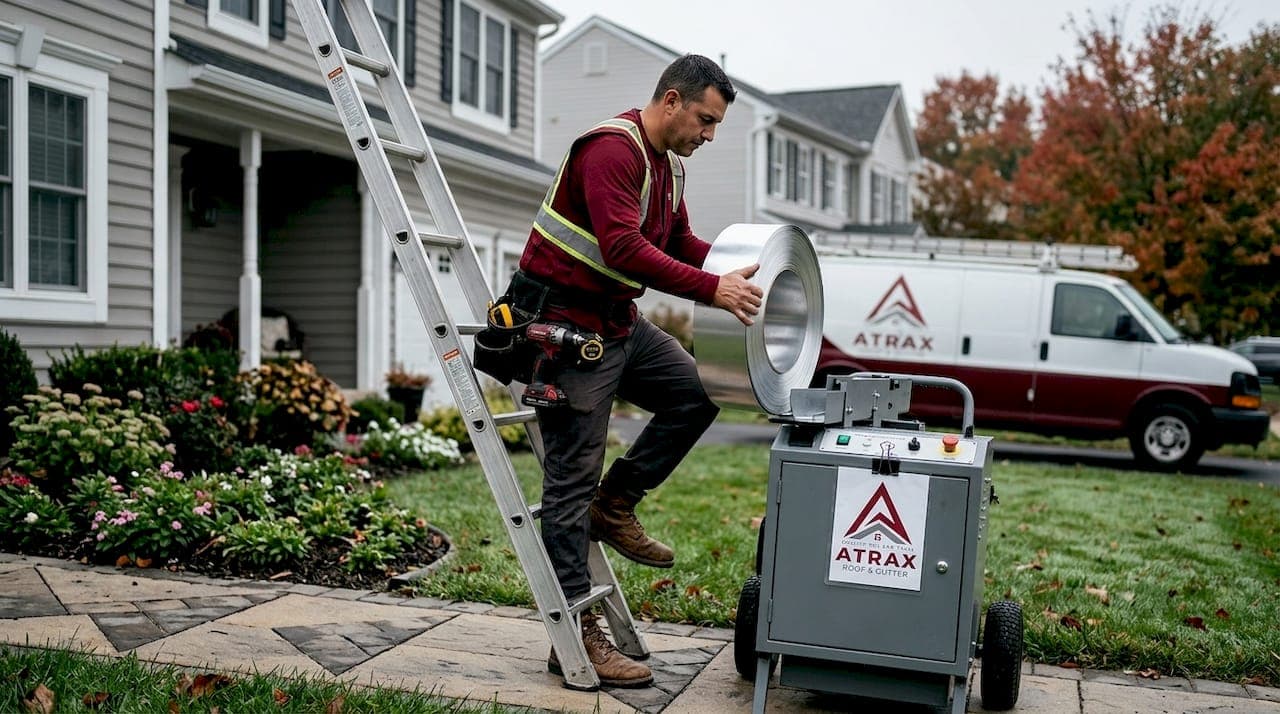
If you've ever dealt with a leaking gutter pulling away from your fascia board after a Pacific Northwest rainstorm, you already understand the frustration. Understanding what is seamless gutter technology and how it differs from traditional sectional systems can save you years of water damage headaches. Seamless gutters are custom-fabricated on-site to fit your home exactly, with far fewer joints than standard gutters. For Washington State homeowners facing heavy rainfall season after season, this is not a minor upgrade. It's a practical decision that affects your foundation, your siding, and your long-term maintenance costs.
Table of Contents
- Key Takeaways
- What is seamless gutter technology and how it works
- Benefits of seamless gutters for Washington State homes
- How seamless gutter installation works
- Types and materials of seamless gutters
- Maintenance and inspection tips for seamless gutters
- My honest take on seamless gutters as a long-term investment
- How Atraxroofandgutter helps Washington homeowners protect their homes
- FAQ
Key Takeaways
| Point | Details |
|---|---|
| Seamless vs. sectional design | Seamless gutters are formed in one continuous piece on-site, eliminating most leak-prone joints. |
| Washington climate advantage | Fewer seams mean better performance against the heavy, sustained rainfall common across the Pacific Northwest. |
| Installation is specialized | Custom fabrication requires a roll-forming machine and precision slope calculation for proper drainage. |
| Material choice matters | Aluminum, steel, and copper each offer different durability, cost, and aesthetic trade-offs for your home. |
| Maintenance extends lifespan | Regular cleaning and inspection, timed to local seasons, protects your investment and prevents costly repairs. |
What is seamless gutter technology and how it works
A seamless gutter is a single, continuous length of gutter channel formed on-site from a coil of metal using a portable roll-forming machine. Unlike traditional sectional gutters, which come in pre-cut 10 or 20-foot pieces that are connected with sealant and overlapping joints, a seamless system is cut to the precise length of your roofline. The result is a gutter that fits your home like it was built for it, because it was.
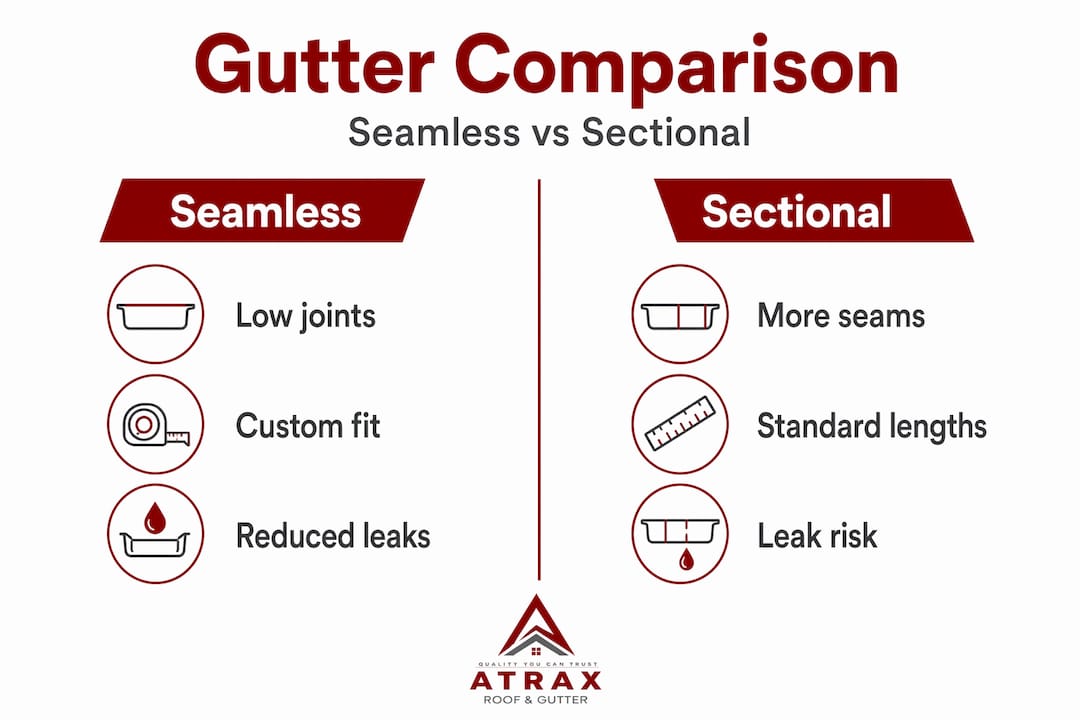
The only seams that exist in a seamless system are at the corners and where downspouts are attached. That's a dramatic reduction compared to sectional gutters. Sectional gutters can have 8 to 10 joints over just 40 feet of run, while a seamless system may have only 2 to 4 connection points across the same span.
The common materials for seamless gutters are aluminum, steel, and copper. Aluminum is by far the most widely installed because it resists rust, bends easily into clean profiles, and costs less than the alternatives. Steel is stronger but requires protective coatings to resist corrosion in wet climates. Copper is the premium choice, developing a distinctive patina over time and lasting 50 years or more.
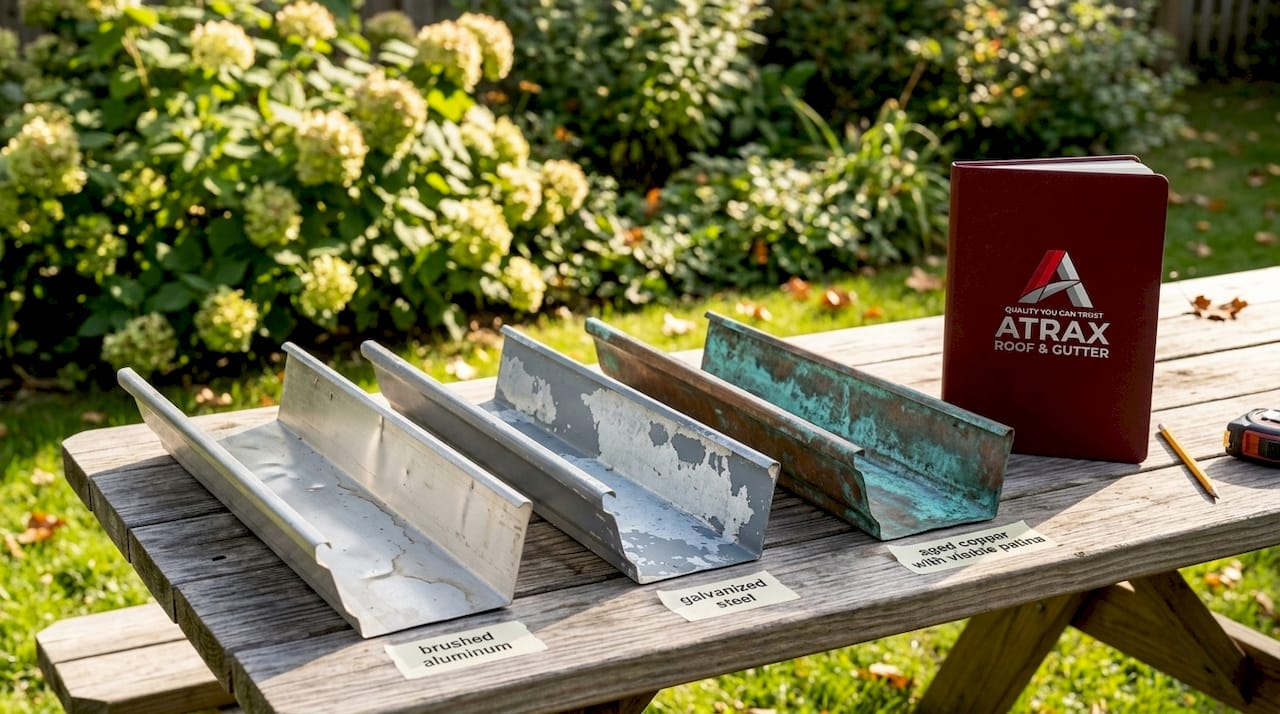
Here's a quick comparison that clarifies the core differences:
| Feature | Seamless gutters | Sectional gutters |
|---|---|---|
| Joint count (per 40 ft) | 2 to 4 points | 8 to 10 joints |
| Fabrication location | On-site, custom-cut | Factory pre-cut pieces |
| Leak risk | Low | Higher at each seam |
| DIY installation | Not practical | Possible |
| Cost | Slightly higher upfront | Lower initial cost |
| Long-term maintenance | Less frequent | More frequent resealing |
Benefits of seamless gutters for Washington State homes
Washington State averages over 37 inches of rain per year in Seattle, and the western side of the Cascades sees months of sustained, moderate-to-heavy rainfall. That kind of sustained moisture exposure is exactly the environment where sectional gutter seams fail fastest. Sealants crack under UV exposure and temperature swings, and joints that were watertight in year one can become the source of water intrusion by year three.
The core seamless gutter benefits come down to these points:
- Fewer leaks. About 80% of gutter system leaks originate at seam joints rather than along the gutter body. Remove most of the seams, and you remove most of the leak risk.
- Lower maintenance burden. With no joints to re-seal, your main maintenance task is keeping the gutters clear of debris, not repeatedly hunting down failing caulk lines.
- Custom fit and cleaner appearance. Because each gutter run is formed to the exact length of your fascia, there's no awkward overlap or misalignment. The finished profile looks intentional and clean.
- Better drainage performance. A continuous channel without internal joint obstructions allows water to flow without restriction, reducing overflow risk during heavy rain events.
- Long-term cost savings. The elimination of joint failures significantly lowers repair frequency and cost over the life of the system.
Pair seamless gutters with gutter guards and you get a system that handles both heavy rain and falling leaves without constant intervention.
Pro Tip: In Washington, the combination of deciduous trees and sustained fall rain can overwhelm gutters that hold even minor debris. Seamless gutters with proper slope drain faster, reducing the risk of overflow even when cleaning gets delayed.
How seamless gutter installation works
This is where seamless gutters separate themselves entirely from DIY territory. The installation process requires specialized equipment and professional-level precision. Here's how it unfolds on a typical job:
- Roofline measurement. The installer measures every run of the fascia precisely, accounting for corners, downspout locations, and any architectural irregularities. This measurement drives the fabrication.
- On-site roll-forming. A portable roll-forming machine loaded with a coil of aluminum (or other selected metal) is parked at your home. The machine extrudes the gutter profile in a single continuous piece at the exact length needed.
- Slope calculation and layout. The standard slope is 1/4 inch drop for every 10 feet of horizontal run. Professional installers use laser levels to mark this pitch precisely on the fascia before attaching any hardware.
- Hanger and bracket installation. Hidden hangers or spike-and-ferrule systems are installed at intervals of no more than 24 inches, giving the gutter enough support to handle water weight and debris load.
- Gutter placement and attachment. The formed gutter run is lifted into position and secured to the fascia along the marked slope line.
- Corner and downspout fabrication. Mitered corners are cut and sealed, and downspout outlets are cut into the gutter bottom at planned locations. Downspout sections are attached and directed away from the foundation.
- Inspection and test run. A good installer tests the system with water to confirm drainage direction, check for any pooling, and verify all connections hold.
The full process for a typical single-family home takes one to two days. Seamless gutter installation costs between $6 and $14 per linear foot, with most Washington homeowners paying $1,200 to $2,800 for a complete system depending on home size and material selected.
Pro Tip: The most common installation error is an inconsistent slope, especially on long runs with multiple high points. Precision in slope installation using laser levels is what separates a gutter that drains cleanly from one that holds standing water and breeds mosquitoes.
A slope that's too shallow causes standing water, corrosion, and pest problems. One that's too steep can cause water to overshoot the downspout and splash against siding or the foundation. Getting it right the first time is the job of an experienced installer.
Types and materials of seamless gutters
Choosing the right material and profile is as much about your home's architecture as it is about budget. Here's what you need to know about each option.
Material trade-offs
Aluminum is the most practical choice for most Washington homeowners. It's lightweight, rust-resistant, available in a wide range of factory colors, and priced accessibly at around $6 to $10 per linear foot installed. It performs well in wet climates without special coatings.
Steel is significantly stronger and handles physical impact better than aluminum, making it a good option if you have large overhanging tree limbs or heavy snow loads. The drawback is that steel requires paint or galvanizing to resist rust, and in a wet climate like western Washington, that protective coating needs monitoring.
Copper is the long-game material. It requires no painting, develops a natural green patina that many homeowners find attractive, and can last 50 years or longer. The cost, often $15 to $25 per linear foot installed, makes it a premium choice suited to higher-end homes where appearance and longevity justify the investment. Copper gutters can also boost your property value in ways that aluminum simply cannot.
Profile options
The two dominant profiles for seamless gutters are K-style and half-round.
K-style gutters offer about 20% greater flow capacity compared to half-round gutters of similar width. The flat back and decorative front profile also makes them easy to attach directly to a fascia board. They're the standard choice for modern homes and handle Washington's rainfall volume well.
Half-round gutters have a rounded, open profile that is self-clearing and creates less internal friction. They drain debris more easily and are the traditional choice for older architectural styles like Craftsman or Tudor homes common throughout Seattle and Bellevue neighborhoods. They also look more elegant, which matters when curb appeal is part of the decision.
Maintenance and inspection tips for seamless gutters
Seamless gutters require less maintenance than sectional systems, but "less" does not mean "none." Washington's combination of heavy rainfall, evergreen needles, and deciduous leaf drop creates a real debris load that builds up faster than most homeowners expect.
Here are the practices that protect your system and your home:
- Clean gutters at least twice per year. In Washington, the best timing is late fall after leaf drop is complete, and again in early spring before the heavy rain season intensifies.
- Inspect the corners and downspout connections. These are the only seam points in a seamless system, and they are where any seal degradation will first appear. Look for rust staining, separation, or gaps.
- Check the slope visually after heavy storms. If you see standing water in the gutter channel, the pitch may have shifted due to hanger failure or settling. This needs prompt attention.
- Look at the fascia behind the gutter. Water staining or soft wood indicates the gutter has been overflowing or leaking for some time. Catching this early prevents more expensive fascia and soffit repairs.
- Consider gutter guards if debris is a persistent problem. Guards do not eliminate the need for cleaning, but they can significantly reduce frequency.
Regular inspection and cleaning tailored to local climate is what extends seamless gutter lifespan and prevents the costly water damage that comes from ignored maintenance. Atraxroofandgutter has published a detailed gutter inspection checklist specifically for Washington homeowners that walks through each inspection point step by step.
Pro Tip: Schedule your fall cleaning after the last major leaf drop in your area, typically late October to mid-November in the Puget Sound region. Cleaning too early means you'll need to go back up after another round of leaves fills the system.
My honest take on seamless gutters as a long-term investment
Over my 10-plus years working on roofs and gutters across the Kirkland, Bothell, and Seattle areas, I've pulled off more failing sectional gutter systems than I can count. What I find most often underneath them is damaged fascia, rotting soffit, and in some cases, water intrusion that has started working its way into the wall cavity. The cost to fix that damage dwarfs the original savings from choosing the cheaper sectional system.
I've heard homeowners say seamless gutters aren't worth the higher upfront price. My experience tells me the opposite is true. The math is straightforward: fewer seams means fewer repair calls, fewer re-caulking sessions, and fewer surprises when the fall rains arrive. In a climate like Washington's, where your gutters are working hard from October through May, that reliability is worth every dollar.
One misconception I want to address directly: seamless gutters are not maintenance-free. They still need cleaning. But the nature of the maintenance shifts from reactive (fixing leaks and resealing joints) to preventive (clearing debris and inspecting connections). That's a much better position for a homeowner to be in.
My strongest advice is this: make sure the installer you hire actually fabricates the gutter on-site. If someone shows up with pre-cut pieces and calls them "seamless," walk away. True seamless gutters require the roll-forming machine to be present at your home. Ask to see it. A legitimate professional will not hesitate to show you how it works.
— Danyllo
How Atraxroofandgutter helps Washington homeowners protect their homes
At Atraxroofandgutter, we handle custom seamless gutter fabrication and installation across Kirkland, Bothell, Redmond, Bellevue, Seattle, and the surrounding communities. Every system we install is formed on-site with precision equipment, calibrated to the exact pitch your roofline requires.

If you're ready to replace an aging sectional system or install gutters on a new home, our team brings over 10 years of local experience to every job. You can browse our completed gutter projects to see the quality of our work firsthand. We also offer flexible financing options so the cost of a proper gutter system doesn't have to wait. For homeowners who need a full system replacement, our gutter replacement service covers everything from material selection to final inspection. Contact us today for a no-surprise quote backed by our 20-year workmanship warranty.
FAQ
What is a seamless gutter and how does it differ from regular gutters?
A seamless gutter is a single, continuous channel formed on-site from metal coil using a roll-forming machine, with joints only at corners and downspout connections. Traditional sectional gutters use pre-cut pieces joined with sealant, creating 8 to 10 leak-prone joints over every 40 feet of run.
How much does seamless gutter installation cost in Washington?
Seamless gutter installation typically costs $6 to $14 per linear foot, with most complete home systems running between $1,200 and $2,800 depending on material and total linear footage.
What material is best for seamless gutters in Washington State?
Aluminum is the most practical choice for most Washington homeowners because it resists rust, handles sustained rainfall well, and is cost-effective. Copper is the premium long-term option, while steel suits homes with heavy physical impact concerns.
How often should I clean my seamless gutters in Washington?
Clean your seamless gutters at least twice per year, ideally in late fall after leaf drop and again in early spring. Local climate and debris load are the primary factors that determine whether more frequent cleaning is needed.
Can seamless gutters be repaired if they get damaged?
Yes. While the continuous body of a seamless gutter rarely fails, the seamed connection points at corners and downspouts can be re-sealed by a professional. Sections with physical damage such as dents or cracks can also be patched or replaced without replacing the entire run.