
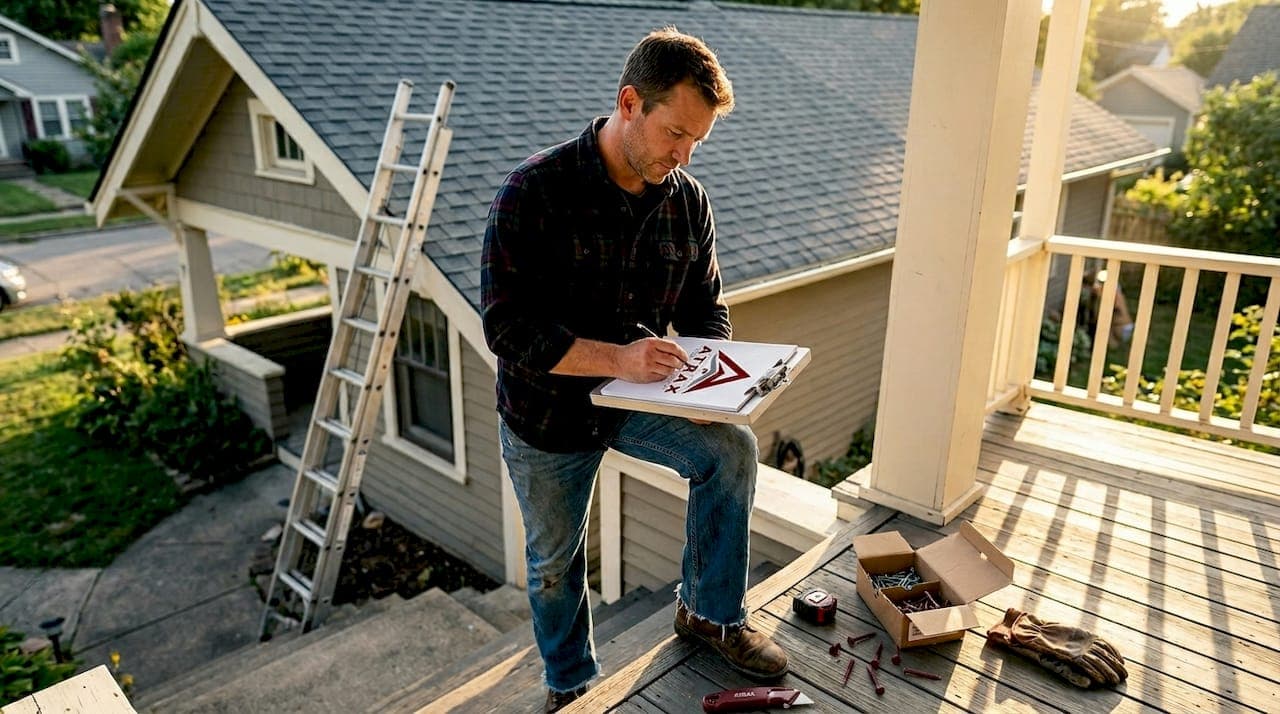
If you've ever called a contractor and heard "your roof is about 22 squares," you're not alone in wondering what that means. A roofing square is the standard unit of measurement the roofing industry uses to price labor, order materials, and write estimates. One roofing square equals exactly 100 square feet. That single misconception, confusing squares with square feet, can throw your budget off by thousands of dollars before the job even starts. This guide breaks down the roofing square definition, how to measure and calculate it, what it costs in Washington state, and how to read any estimate with confidence.
Table of Contents
- Key Takeaways
- What is a roofing square, exactly?
- Roofing squares and material quantities
- Understanding roofing cost per square
- How to measure roofing squares yourself
- Reading estimates that use roofing squares
- My honest take on why this matters
- Protect your home with a contractor you can trust
- FAQ
Key Takeaways
| Point | Details |
|---|---|
| One square equals 100 sq ft | A roofing square is a 10x10 foot area, not the same as one square foot. |
| Materials are sold by the square | Standard asphalt shingles typically require 3 bundles to cover one roofing square. |
| Washington costs range widely | Expect to pay $300 to $900 per square depending on material and roof complexity. |
| Tear-off adds hidden costs | Disposal and tear-off fees can add $75 to $150 per square on top of base quotes. |
| Measuring your own roof saves money | A basic square calculation helps you verify contractor estimates before signing anything. |
What is a roofing square, exactly?
A roofing square is a unit of area, not a shape. One roofing square equals 100 square feet, which works out to a 10-foot by 10-foot section of roof surface. Contractors, material suppliers, and manufacturers all use this measurement as the baseline for quoting work and packaging products.
Converting your roof's total area into squares is straightforward. You divide total square footage by 100.
- Measure the length and width of each roof section (slope by slope, not just the footprint of your house).
- Multiply length by width for each section to get square footage.
- Add all sections together.
- Divide the total by 100. The result is your number of roofing squares.
For example, a roof with a total surface area of 2,200 square feet works out to 22 squares. Most residential roofs fall between 12 and 30 squares, which translates to 1,200 to 3,000 square feet of actual surface. If your house footprint is 1,500 square feet, your roof surface will be larger because of the pitch, often 25% to 50% larger.
Manufacturers package roofing materials around this unit. A bundle of shingles is sized so that a set number of bundles covers exactly one square. That packaging system is why every roofer, supplier, and estimator you talk to will use squares as their default language.
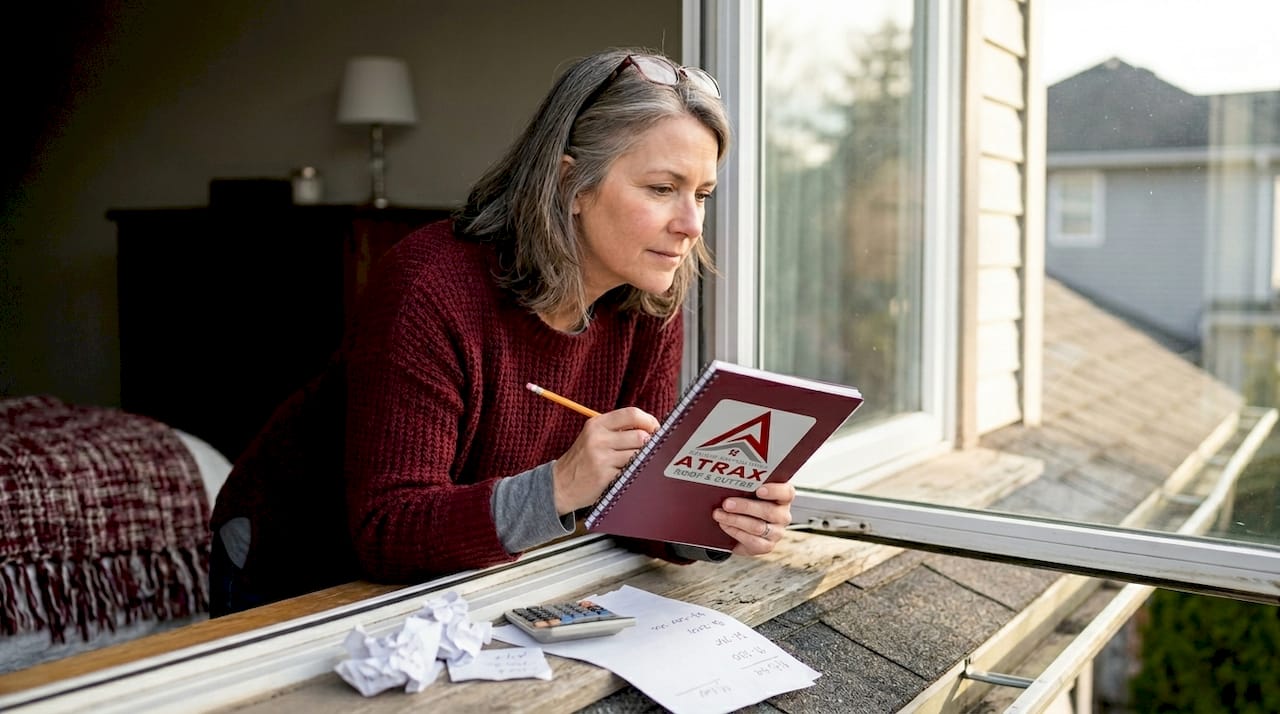
Pro Tip: Add 10% to 15% to your final square count when ordering materials. That buffer covers waste from cuts, valleys, and any damaged pieces during installation.
Roofing squares and material quantities
Once you know your roof's square count, you can figure out exactly how much material you need. This is where the roofing square definition becomes genuinely useful, not just a piece of terminology.
For standard 3-tab asphalt shingles, one square requires 3 bundles. Architectural (dimensional) shingles, which are heavier and more durable, typically need 4 to 5 bundles per square. Here's a quick comparison of common Washington-area roofing materials:
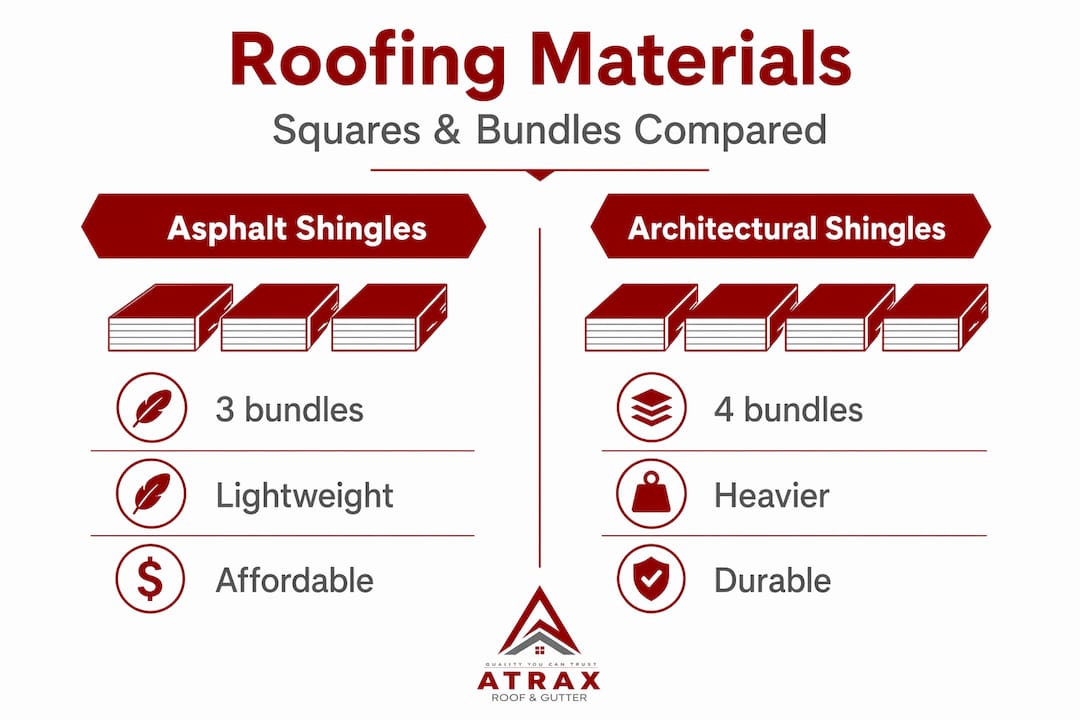
| Material type | Bundles per square | Notes |
|---|---|---|
| 3-tab asphalt shingles | 3 | Most affordable; lighter weight |
| Architectural shingles | 4 | Common upgrade; better wind resistance |
| Impact-resistant shingles | 4 to 5 | Recommended for storm-prone areas |
| Metal roofing panels | Varies | Sold by linear foot, converted to squares |
| Cedar shake | 4 to 5 | Popular in Pacific Northwest; higher cost |
Washington homeowners have specific reasons to think carefully about material choice. The west side of the state deals with persistent rain, moss growth, and wind, while eastern Washington sees hotter summers and occasional hail. Impact-resistant shingles cost more per square upfront, but they reduce long-term repair costs in weather-exposed areas.
Here's why calculating roofing squares matters for your material order:
- Ordering too few bundles means work stops mid-project, and new shipments may not match the dye lot of your original shingles.
- Ordering too many bundles wastes money, though most suppliers allow returns on unopened bundles within a set window.
- For a 16-square roof, you need 48 bundles of standard 3-tab shingles. That's a simple multiplication that lets you double-check supplier invoices before you pay.
Pro Tip: If you're comparing a metal roof to asphalt shingles for your Washington home, check the metal vs. asphalt cost breakdown before committing. Material costs per square vary significantly between the two.
Understanding roofing cost per square
Knowing your square count transforms an abstract roofing quote into a number you can actually evaluate. Roofing cost per square in 2026 ranges from $300 to $900 per square depending on materials, labor rates, and where you are in Washington. A roof in Bellevue or Kirkland will typically run higher than one in a more rural area, simply due to labor market differences.
That wide range reflects two main cost categories. Labor accounts for roughly 40% of total cost, while materials make up 60%. But those percentages shift with complexity. A simple gable roof on a single-story home is fast to work on. A roof with hips, dormers, skylights, and steep pitch takes significantly more labor hours per square, which pushes the labor share higher.
How roof complexity drives up cost
Roof complexity is one of the most underestimated cost factors homeowners face. Each feature that breaks up the roof plane, a chimney, a valley, a dormer, adds cutting, flashing, and sealing work that adds time. More time per square means higher total labor cost even if the material price stays the same. Roof complexity increases labor hours per square, and that adds up fast on larger or more detailed roofs.
2026 pricing trends in Washington
Material prices are not static this year. Shingle prices have risen 10 to 15% due to fuel surcharges and supply chain adjustments. For a 20-square roof, that increase adds $200 to $500 to material costs alone. Delaying a roofing project in this pricing environment carries real financial risk. If you've been putting off a repair or replacement, the cost of waiting may exceed the cost of acting now.
For Washington-specific price data, the roof replacement cost guide for Washington homeowners has current numbers broken down by material type and region.
How to measure roofing squares yourself
You do not need to hire anyone to get a reasonable square count for your roof. A basic measurement gives you enough information to verify contractor estimates, compare bids, and plan your budget before anyone steps on your property.
Here's how to do it safely and accurately:
- Sketch your roof from the ground. Walk around the house and draw a rough overhead view. Identify each separate roof section, front slope, back slope, garage, and porch roof.
- Measure the house footprint. Use a tape measure along the exterior walls to get the length and width of each section of the home directly below each roof plane.
- Estimate the pitch factor. Roof pitch describes how steep the slope is. A flat roof has a pitch factor of 1.0. A standard residential pitch of 4:12 has a factor of about 1.054. Steeper roofs have higher factors. Multiply your footprint area by the pitch factor to get actual roof surface area.
- Divide by 100. That gives you your square count.
- Add your waste factor. For simple roofs, add 10%. For complex roofs with lots of cuts and angles, add 15%.
An online roofing square calculator can help you work through these numbers quickly if math is not your strong point.
Pro Tip: Never measure from the roof itself unless you have proper fall protection equipment. Most homeowners can get accurate enough numbers from the ground and a pitch gauge app on their phone.
The most common measurement mistake is using only the house's floor plan square footage. Your actual roof surface is always larger than your floor plan because of slope. A 2,000-square-foot footprint with a 6:12 pitch translates to closer to 2,300 square feet of actual roof surface.
Reading estimates that use roofing squares
Here's where understanding roofing squares pays off most directly. When you receive a roofing estimate, it will almost always price labor and materials per square, not per square foot. That distinction matters more than most homeowners realize.
Confusing "per square" with "per square foot" pricing can lead to serious budget miscalculations. If a quote says "$600 per square" and you read it as "$600 per square foot," you would estimate a 2,000-square-foot roof at $1.2 million instead of $12,000. That's an extreme example, but smaller versions of this confusion happen regularly when homeowners skim estimates without understanding the unit.
When reviewing any roofing quote, look for these items:
- Materials cost per square. This should list the shingle type, brand, and price per square separately from labor.
- Labor cost per square. Should reflect the number of squares on your roof and account for complexity.
- Tear-off and disposal fees. Tear-off and disposal can add $75 to $150 per square on top of everything else. This cost is often listed separately or, worse, buried in a lump sum.
- Number of squares used in the estimate. Compare this to your own measurement. If a contractor quotes 28 squares on a roof you measured at 22, ask for clarification.
Pro Tip: Ask every contractor to provide a line-item quote with materials and labor listed separately and with the total square count clearly stated. Any contractor unwilling to provide this level of detail is not someone you want on your roof.
For a deeper look at how to review bids side by side, the guide to reading roofing estimates in Washington covers exactly what to look for and which questions to ask.
My honest take on why this matters
After more than 10 years of roofing homes across Kirkland, Bothell, Bellevue, and Seattle, I've seen the same situation repeat itself. A homeowner gets three bids. Two are close in price. One is significantly lower. They take the low bid, and three months later they call me because the job was incomplete or the square count was wrong from the start.
In my experience, the homeowners who understand roofing squares walk into those conversations differently. They ask better questions. They catch errors. They don't accept a quote that inflates their square count by 20% to pad the margin.
I've also seen the opposite problem. Someone attempts a DIY repair without calculating their material needs correctly, ends up short on bundles mid-project, and either delays the job or buys mismatched shingles. Neither outcome is good for a roof in the Pacific Northwest, where a one-day gap in coverage can invite real water damage.
My advice is this: you don't need to become a roofing expert. But knowing what a square is, how to roughly count them, and how to spot the number in a quote gives you real leverage. Use it. And when a project is beyond your comfort level, hire someone who will explain every line on the estimate without hesitation.
— Danyllo
Protect your home with a contractor you can trust
When you understand your square count, you're ready to have a real conversation with a roofer. At Atraxroofandgutter, we've built our business on giving homeowners exactly that kind of honest, clear communication. Every estimate we provide includes a full square count, line-item pricing, and no hidden fees.
We serve Kirkland, Bothell, Redmond, Bellevue, Seattle, and the surrounding communities with premium GAF and CertainTeed materials, backed by our 20-year workmanship warranty. Whether you need a full replacement or targeted roof repair services, we'll give you accurate numbers and honest recommendations. If budget is a concern, explore our financing options to make your project work. Reach out today for a no-surprise quote.
FAQ
What is a roofing square in simple terms?
A roofing square is 100 square feet of roof surface, equivalent to a 10-foot by 10-foot area. It is the standard unit roofers use to measure, price, and order materials.
How many bundles of shingles do I need per square?
Standard 3-tab asphalt shingles require 3 bundles per roofing square. Heavier architectural or impact-resistant shingles typically need 4 to 5 bundles per square.
What does roofing cost per square in Washington state?
In 2026, Washington homeowners can expect to pay between $300 and $900 per roofing square, depending on the material chosen, roof complexity, and local labor rates.
Why is my roof square count higher than my home's square footage?
Your roof surface area is always larger than your floor plan because the slope adds surface area. Steeper pitches create more surface than a flat roof covering the same footprint.
What are tear-off fees and are they included in quotes?
Tear-off and disposal of old roofing material can cost $75 to $150 per square and are often listed separately from installation costs. Always confirm whether a quote includes this line item before signing.